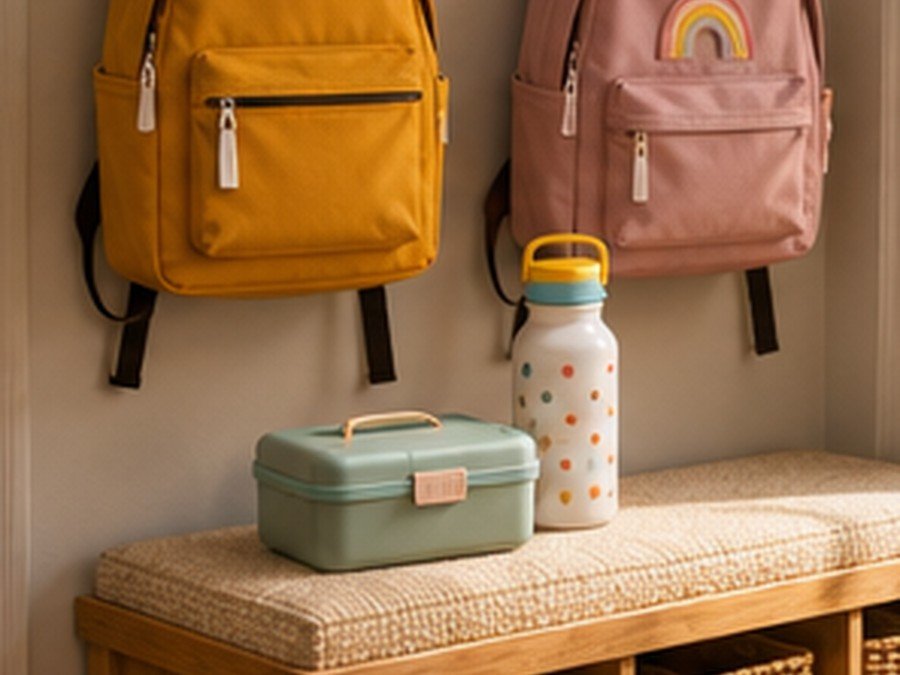
The first ten minutes after school can leave a trail of bags, snack wrappers and forms. A drop zone works best when it sits on the route your family already takes. Start with the bag, the lunch box and the papers.
Create three stops along the way
Give each backpack a hook, shelf or basket your child can reach comfortably. Choose one tray for papers that need an adult and use the kitchen as the next stop for the lunch box. If the entry is narrow, try a small paper tray and one backpack basket, leaving the pathway clear.
Teach the sequence when you have breathing room
Try “bag, papers, lunch box.” Point to each spot and practice it together once on a quiet afternoon. Draw a small symbol for each stop if pictures help your child remember the order. Where a step keeps getting missed, check whether the spot is reachable and on the normal path.
Decide what happens to the paper tray
Pick one time you already pass the tray, such as after dinner. Sign what needs returning, put dates on the calendar and set aside papers you want to keep. Put return items back in the backpack while it is still in its usual spot. At the end of the week, clear the tray and remove any bin your family never uses.
Lay out the three stops in a narrow hall
Start with the first reachable spot that leaves the walkway clear. A basket under a bench can hold the backpack and a shallow tray on a nearby surface can take papers. Put the third stop in the kitchen where you actually empty the lunch box. If your child shares a space with a sibling, give each bag a distinct spot or mark each hook with a simple picture. The paper tray can stay shared if the names on forms are easy to identify.
Walk through a sample afternoon
After the bag goes on its hook, have your child pull out papers for an adult and put the lunch box in the kitchen. If there are no papers, they can head straight to the kitchen. Try the route once together when nobody is rushed. If an empty lunch box routinely sits in the backpack, make the kitchen stop easy to see or place a simple picture at the bag spot as a reminder. If a basket is routinely missed, check whether it is on the route people already take.
Keep the paper tray moving
When you check the tray after dinner, choose one action for each paper. Sign and return forms, put dates on the calendar, and move keepsakes to wherever you store them. Keep signed slips in the bag before it moves from the landing spot. Once a week, clear old notices and change any stop that caused a bottleneck. Start by moving one item and watching what happens on the next school day.
For more ideas, see another compact-space storage setup.


