Choosing a moisturizer can be confusing when products come as gels, lotions, creams, and ointments. A helpful starting point is how your skin feels and how rich a texture you enjoy using. You do not need the most expensive formula, and there is no single moisturizer that works best for everyone.
This guide explains the common textures, what to look for on a label, and how to compare products before buying. It is general skincare information; ask a dermatologist for advice about persistent dryness, irritation, or a diagnosed skin condition.
First, understand the main moisturizer textures
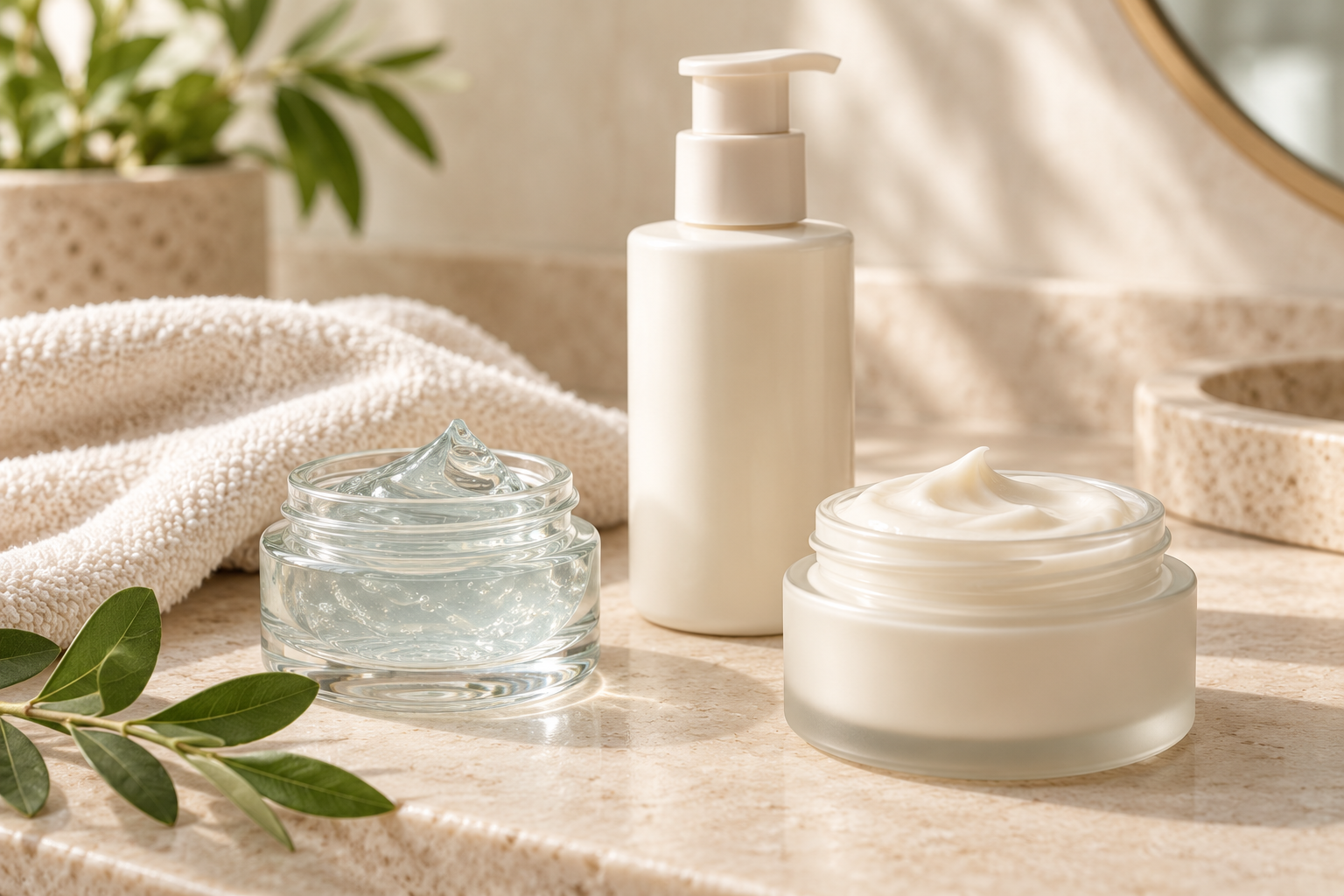
Moisturizers come in different formats and thicknesses. The American Academy of Dermatology (AAD) describes gels as generally lighter, creams as thicker, and ointments as the richest texture. Lotions sit between these categories, though formulas vary by brand.
| Texture | How it may feel | A practical starting point |
|---|---|---|
| Gel | Light, often quick to spread | If you prefer a lighter feel |
| Lotion | Fluid and easy to apply over a larger area | Everyday face or body use, depending on the formula |
| Cream | Thicker and richer | If your skin feels dry or you prefer a more substantial texture |
| Ointment | Very rich and often occlusive | For very dry areas, if the product suits you |
These are general descriptions, not guarantees. Check the product directions and decide based on comfort, ingredients, and the area where you plan to use it.
Choose based on how your skin feels
If your skin tends to feel dry
You may prefer a cream or ointment because they feel richer than a gel or lotion. The AAD recommends applying moisturizer while skin is still damp after bathing to help retain moisture. If dryness is painful, cracked, persistent, or accompanied by a rash, seek advice from a qualified healthcare professional.
If your skin tends to feel oily
You might prefer a lightweight gel or lotion. If you are concerned about clogged pores, the AAD suggests looking for labels such as “oil-free,” “non-comedogenic,” or “won’t clog pores.” These descriptions can help narrow choices but do not guarantee a specific result for every person.
If your skin feels dry in some places and oily in others
You can apply moisturizer where your skin feels dry and use less in areas that already feel comfortable. You do not have to apply the same amount across your entire face. If you are managing acne or another condition, ask your dermatologist how moisturizer fits into your treatment plan.
If your skin is sensitive or easily irritated
Consider fragrance-free products and keep the routine simple. “Natural” does not automatically mean non-irritating, and no front-label claim guarantees you will tolerate a formula. If you have a known allergy, follow your clinician’s instructions and review ingredients carefully.
What ingredients should you look for?
Moisturizers can include ingredients that attract water, soften the skin, or reduce water loss. The AAD names ceramides and hyaluronic acid among ingredients people may see in moisturizers. The best formula still depends on your needs, preferences, and any guidance from a healthcare professional.
Rather than buying a product because one ingredient is trending, consider the whole formula and the product’s intended use. Read the directions, check for known sensitivities, and introduce a new product one at a time when practical.
How to compare moisturizer products before you buy
Use this checklist when comparing products:
- Texture: Will you enjoy using a gel, lotion, cream, or ointment?
- Where you will use it: Is it made for your face, body, or both?
- Label details: Does it meet any specific preferences, such as fragrance-free or non-comedogenic?
- Directions: How much should you use, and how often?
- Size and value: Compare price per ounce, not only the shelf price.
- Packaging: Will the container be easy to use and keep clean?
- Your routine: Does it duplicate a product you already own?
Expensive does not automatically mean more effective for your needs. Choose a product you can afford and use as directed.
How to apply moisturizer
Follow the product label. Many people apply moisturizer after washing, while skin is slightly damp. In a basic morning routine, apply sunscreen after moisturizer and before makeup. At night, moisturizer often follows cleansing and any prescribed treatment, unless your clinician gave different instructions.
If a product causes a persistent reaction, stop using it and seek professional advice if symptoms continue. Do not keep applying a product that is making your skin uncomfortable just because it was recommended online.
Frequently asked questions
Is a gel or cream moisturizer better?
Neither is best for everyone. Gels generally feel lighter; creams feel richer. Pick the texture that fits your skin and that you are comfortable using.
Do people with oily skin need moisturizer?
Needs vary. If you choose to use one, you may prefer a lightweight formula. The AAD notes that people concerned about breakouts can look for “oil-free,” “non-comedogenic,” or “won’t clog pores” on the label.
Should I apply moisturizer to wet or dry skin?
The AAD recommends applying moisturizer while skin is still damp after bathing to help retain moisture. Follow the product directions for your face and body.
Does a higher price mean a better moisturizer?
No. Price alone does not show whether a product is the right texture or formula for you. Compare ingredients, directions, size, and cost.
The takeaway
Choose a moisturizer by texture, intended use, label details, and how comfortable it feels—not by price or trend alone. Gels and lotions tend to feel lighter, while creams and ointments are richer. For ongoing skin problems or treatment questions, get individualized advice from a qualified professional.
Sources and further reading
- American Academy of Dermatology Association, How to pick the right moisturizer for your skin
- American Academy of Dermatology Association, Moisturizer: Why you may need it if you have acne
- American Academy of Dermatology Association, Skin care on a budget
Related reading
You may also find our 7 Tips To Make Your Skin Glow Without Using Makeup guide helpful.