✍️ محتوى المقال كامل (كوبيه وديرو فـ WordPress):
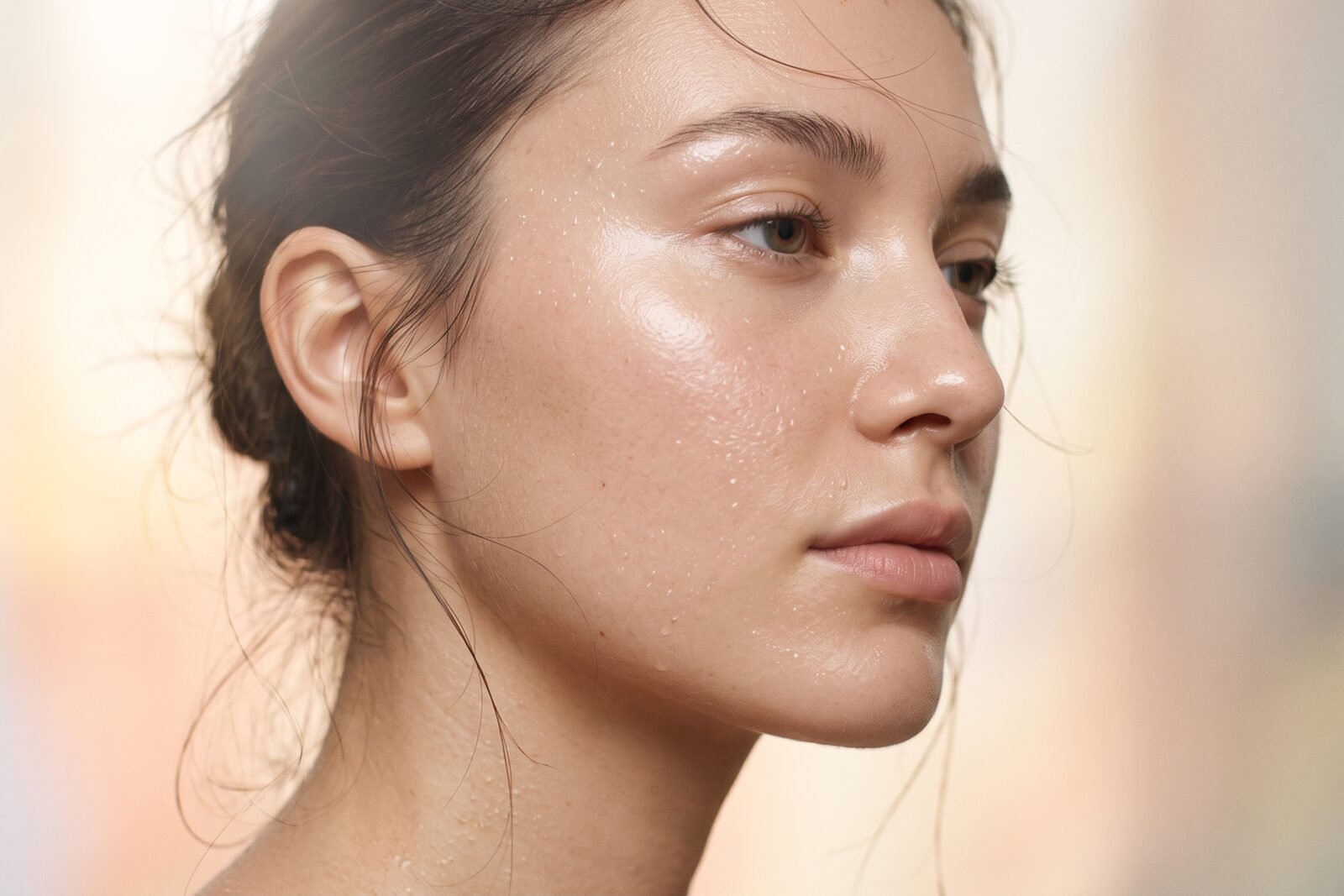
The world has fallen in love with the Korean “Glass Skin” (Yuri Pibu) aesthetic—that signature translucent, lit-from-within complexion that looks as clear and luminous as a pane of glass.
However, if you have reactive, sensitive, or breakout-prone skin, trying to follow the traditional 10-step K-Beauty routine often ends in frustration. Piling on heavy cleansing balms, multiple rich essences, snail mucin, and dense sleeping packs can quickly clog pores, trigger fungal acne, and overwhelm a delicate skin barrier.
True glass skin is not about layering heavy oils or creating artificial surface shine. In authentic Korean dermatology, glass skin is a reflection of calm, deeply hydrated skin with an intact, healthy barrier.
Here is the refined 5-step routine designed specifically to deliver a glass-like glow for sensitive, blemish-prone complexions.
Step 1: The Non-Comedogenic Double Cleanse
A proper double cleanse is the foundation of clear glass skin. It removes daily pollution and stubborn sunscreen without stripping your skin’s protective lipids.
The Technique:
- First Cleanse (Dissolve): Avoid heavy balms formulated with pore-clogging ethylhexyl palmitate or mineral wax. Instead, choose a lightweight cleansing oil formulated with non-comedogenic oils like sunflower seed, jojoba, or grapeseed oil. Massage gently onto dry skin for 60 seconds to break down oxidized sebum inside pores.
- Emulsify & Rinse: Splash with warm water until the oil turns into a milky white liquid, then rinse clean.
- Second Cleanse (Balance): Follow with a gentle, low-pH (pH 5.0 to 5.5) gel cleanser infused with soothing botanicals like Heartleaf (Houttuynia Cordata) or Green Tea.
Step 2: The “Skin Flooding” Rice & Mugwort Toner
Instead of applying one thick, heavy cream, the key to glass skin lies in layering light, watery hydration—a technique known as “skin flooding.”
Star Ingredients:
- Fermented Rice Water: Packed with vitamins, amino acids, and minerals, rice water naturally brightens dull skin and smooths uneven texture without the irritation of harsh acids.
- Mugwort (Artemisia Princeps): A prized botanical in traditional Korean medicine, mugwort cools down flushed skin, calms cystic flare-ups, and relieves redness.
The Application Method: Pour 4 to 5 drops of toner into your palms and gently pat it across your face and neck while your skin is still slightly damp. Wait 30 seconds, then repeat with a second layer. This fills the spaces between surface skin cells with moisture, creating that plump, luminous look.
Step 3: Calming Centella Asiatica (Cica) Ampoule
Breakout-prone skin needs active barrier repair to maintain light reflectivity. Any active inflammation scatters light, making the skin look dull rather than luminous.
Look for a concentrated soothing ampoule featuring Centella Asiatica and its four isolated active compounds:
- Madecassoside: Soothes redness and calms irritation.
- Asiaticoside: Supports skin healing and collagen balance.
- Madecassic Acid & Asiatic Acid: Strengthen the lipid barrier.
Apply half a dropper across your skin. The featherlight watery texture absorbs instantly, hydrating cells without leaving a sticky or heavy residue.
Step 4: Weightless Hydration with Polyglutamic Acid (PGA)
Many people rely on hyaluronic acid for hydration, but hyaluronic acid can sometimes feel sticky or even pull moisture from deeper skin layers in dry environments.
Enter Polyglutamic Acid (PGA):
- PGA is a naturally occurring peptide biopolymer derived from fermented soybeans (Natto).
- It can hold up to five times more water than hyaluronic acid.
- Because PGA has a larger molecular structure, it forms a light, flexible, breathable film over the surface of your skin. This film locks in the toner and ampoule layers beneath it, diffuses ambient light, and smooths fine texture for an instant glass-like finish.
Choose an oil-free water-gel cream that features PGA, ceramides, and panthenol.
Step 5: The Weightless Dewy Fluid SPF 50+
Sunscreen is the non-negotiable step for achieving and maintaining glass skin. Without daily UV protection, photo-damage breaks down collagen and triggers dark spots, undoing all your skincare efforts.
Modern Korean sunscreens feel more like luxury moisturizers than traditional chalky sunblocks:
- Look for lightweight chemical or hybrid fluid sunscreens labeled SPF 50+ and PA++++.
- Formulas infused with Birch Juice, Niacinamide (2%), and Adenosine sink in without leaving a white cast or greasy sheen, leaving behind a dewy, glowing finish that wears beautifully under makeup.
The Sensitive Glass Skin Routine Checklist
- Step 1: Gentle Double Cleanse (Jojoba/Sunflower Oil + Low-pH Heartleaf Gel)
- Step 2: Layered Hydration (Pat fermented Rice Water or Mugwort Toner 2 times)
- Step 3: Soothe & Calm (Centella Asiatica / Madecassoside Ampoule)
- Step 4: Lock In Moisture (Oil-Free Water-Gel Cream with Polyglutamic Acid)
- Step 5: Daily Protection (Lightweight Dewy SPF 50+ PA++++)
Frequently Asked Questions (FAQ)
Can I get glass skin if I have active acne or textured scars? Yes. Glass skin is about skin health, calm tone, and deep hydration—not airbrushed perfection. By focusing on soothing botanicals (like Cica and Mugwort) rather than harsh scrubs, you calm red breakouts, smooth rough patches, and restore a healthy, natural glow.
How often should I exfoliate when following this routine? Keep exfoliation minimal: use a gentle PHA (Gluconolactone) or LHA serum once a week at most. PHAs have a larger molecular size than glycolic acid, gently removing dead surface cells without penetrating too deep or irritating sensitive skin.
Is snail mucin necessary for glass skin? Not necessarily. While snail mucin is popular, it can trigger allergic reactions or fungal breakouts in people sensitive to dust mites or mold. Fermented rice water, cica, and polyglutamic acid deliver equal or better hydration without that risk.
Continue reading
More from the edit.
At-Home Red Light Therapy: What Dermatologists Don’t Tell You Before Buying
October 13, 2026 · 5 min read
Copper Peptides vs Retinol: Which Anti-Aging Active Does Your Skin Need in 2026?
October 13, 2026 · 6 min read