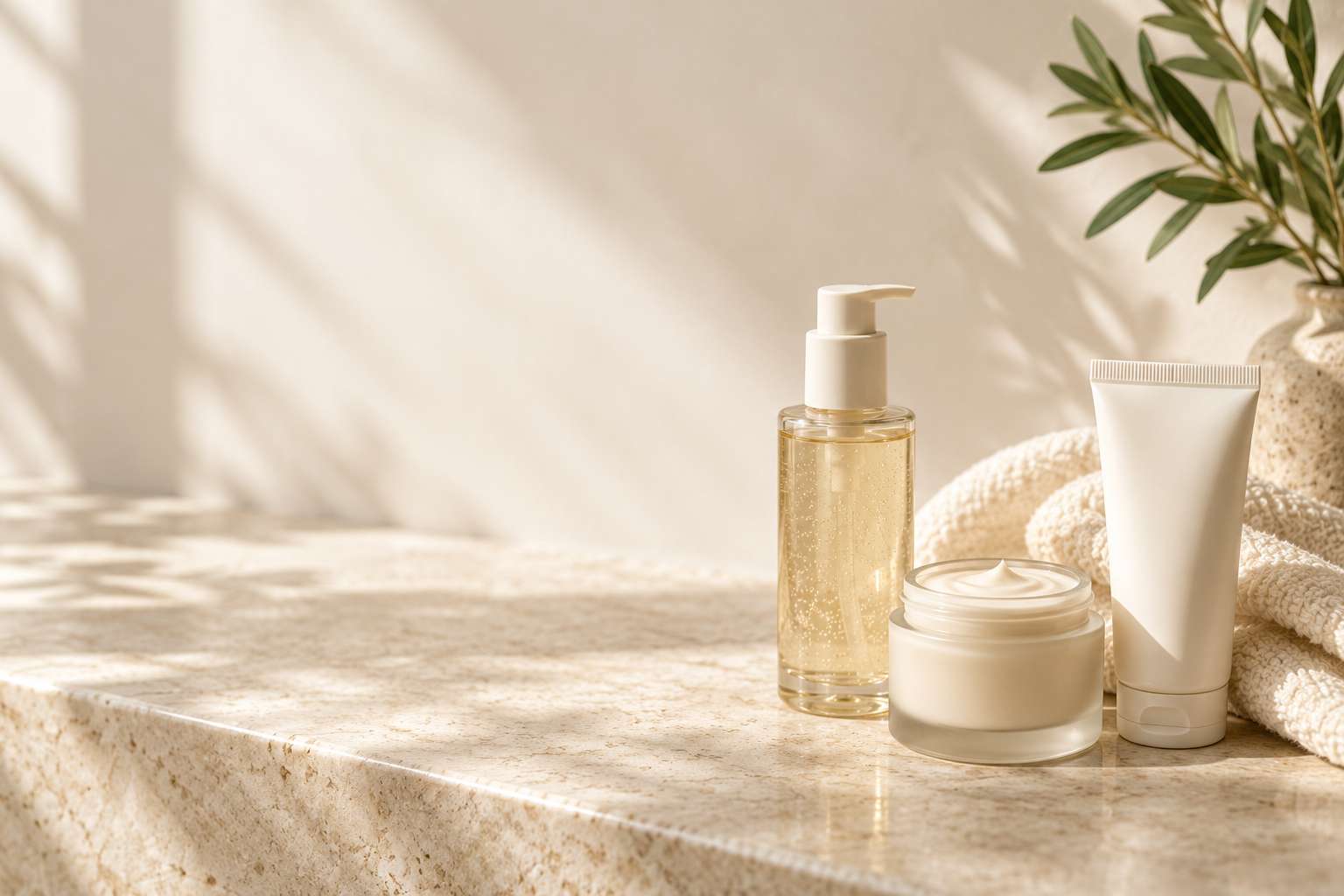
A skincare routine can get complicated quickly. New launches, trending ingredients, and long product lists can make it seem as if you need a different item for every concern. But a minimal routine can be a sensible starting point: fewer products to buy, fewer steps to remember, and an easier way to notice how your skin responds.
This guide explains the basic steps, how to choose products, and how to add an optional product thoughtfully. It is general educational information, not individualized medical advice.
What is a minimal skincare routine?
A minimal skincare routine uses a small number of products to cover basic cleansing, moisturizing, and daytime sun protection. The exact routine depends on your skin, your environment, and any advice from a healthcare professional. Minimal does not mean every person must use the same products or that one routine can treat a skin condition.
For a simple starting point, consider:
- A gentle cleanser, or a water rinse when that feels more comfortable
- A moisturizer, if you need one
- A broad-spectrum sunscreen for daytime outdoor exposure
The American Academy of Dermatology describes cleansing, moisturizing, and sun protection as core parts of a budget-conscious routine. It also notes that products do not need to be expensive to be effective.
Step 1: Choose a cleanser that feels gentle
A cleanser helps remove makeup, sunscreen, oil, and everyday dirt. Look for a formula that is comfortable for you and use it with lukewarm water and your fingertips. Pat your face dry instead of rubbing it.
You may not need to cleanse twice a day if that leaves your skin dry or uncomfortable. AAD guidance recommends gentle washing, avoiding abrasive scrubbing, and washing before bed; frequency can vary with your skin and activities. If you exercise or sweat heavily, wash afterward when practical.
Step 2: Add moisturizer if your skin needs it
Moisturizer helps relieve dryness and can make your routine more comfortable. Textures vary: gels and lotions are often lighter, while creams and ointments are richer. Choose one you like enough to use and that suits your budget.
If you tend to have oily skin, a lighter formula may feel better. If you tend to be dry, a richer texture may feel more comfortable. These are starting points rather than rules. A product label cannot guarantee how your individual skin will respond.
Step 3: Make sun protection part of daytime habits
If you will be outside during the day, use a broad-spectrum sunscreen according to its label. The AAD recommends broad-spectrum, water-resistant sunscreen with SPF 30 or higher. Sun protection can also include shade, a hat, sunglasses, and protective clothing.
Apply products in a sensible order: cleanse, use any prescribed medication or treatment as directed, apply moisturizer, then sunscreen. Follow the sunscreen label for application and reapplication. If a product causes a persistent reaction, discontinue it and ask a qualified professional what to do.
What can a beginner skip?
You can skip any step or product that does not meet a real need. A minimal routine does not automatically require toner, essence, face oil, eye cream, exfoliant, mask, or multiple serums. Those products are optional, and adding them all at once makes it hard to tell what is helping or irritating your skin.
If you want to try a new product, introduce one at a time and read the directions. If you have a diagnosed skin condition or use prescription treatment, ask your clinician before changing your routine.
How to build a routine without overspending
Start with what you already own if it is still in date, suitable for your use, and not causing a reaction. Make a short list of the steps you actually need, then compare products by size, price, directions, and feel. Avoid buying duplicates because a trend says a product is essential.
A useful shopping checklist:
- What job should this product do?
- Do I already own something that does the same job?
- Can I use it as directed and afford to replace it?
- Does the formula feel comfortable enough for me to use?
- Am I buying it because I need it, or because a trend made it sound mandatory?
This is also a more honest way to make product recommendations: describe the product type and decision factors, and only claim personal experience when the writer actually used it.
A sample minimal routine
Morning: Rinse or cleanse gently; moisturize if needed; apply broad-spectrum sunscreen before daytime outdoor exposure.
Evening: Remove makeup or sunscreen; cleanse gently; use prescribed treatment as directed; moisturize if needed.
Use this as a starting template, not a prescription. A dermatologist can tailor recommendations to your individual skin and medical history.
Frequently asked questions
Is a three-step skincare routine enough?
For many people, cleansing, moisturizing when needed, and sun protection can make a practical basic routine. Individual needs differ, and people with skin conditions may need professional guidance or prescribed treatment.
Can I have a minimal routine if I wear makeup?
Yes. Add a makeup-removing step if it helps you remove makeup comfortably before cleansing. Choose a method that works for your products and avoid harsh rubbing.
Is expensive skincare better?
Not necessarily. The AAD notes that effective skincare can be budget-friendly. Focus on a product’s purpose, label directions, comfort, and cost rather than assuming a higher price guarantees better results.
How do I know if I should add another product?
Have a specific reason for adding it, check its directions, and introduce it separately from other new products. For a medical concern or treatment question, consult a qualified dermatologist.
The takeaway
A minimal skincare routine is about choosing a few useful steps and making them fit your life. Start with gentle cleansing, use moisturizer when you need it, and include daytime sun protection. Skip steps that do not serve a clear purpose, and seek professional advice when you need care tailored to a skin condition.
Sources and further reading
- American Academy of Dermatology Association, Skin care on a budget
- American Academy of Dermatology Association, Face washing 101
- American Academy of Dermatology Association, Should I apply my skin care products in a certain order?
Related reading
You may also find our 7 Tips To Make Your Skin Glow Without Using Makeup guide helpful.