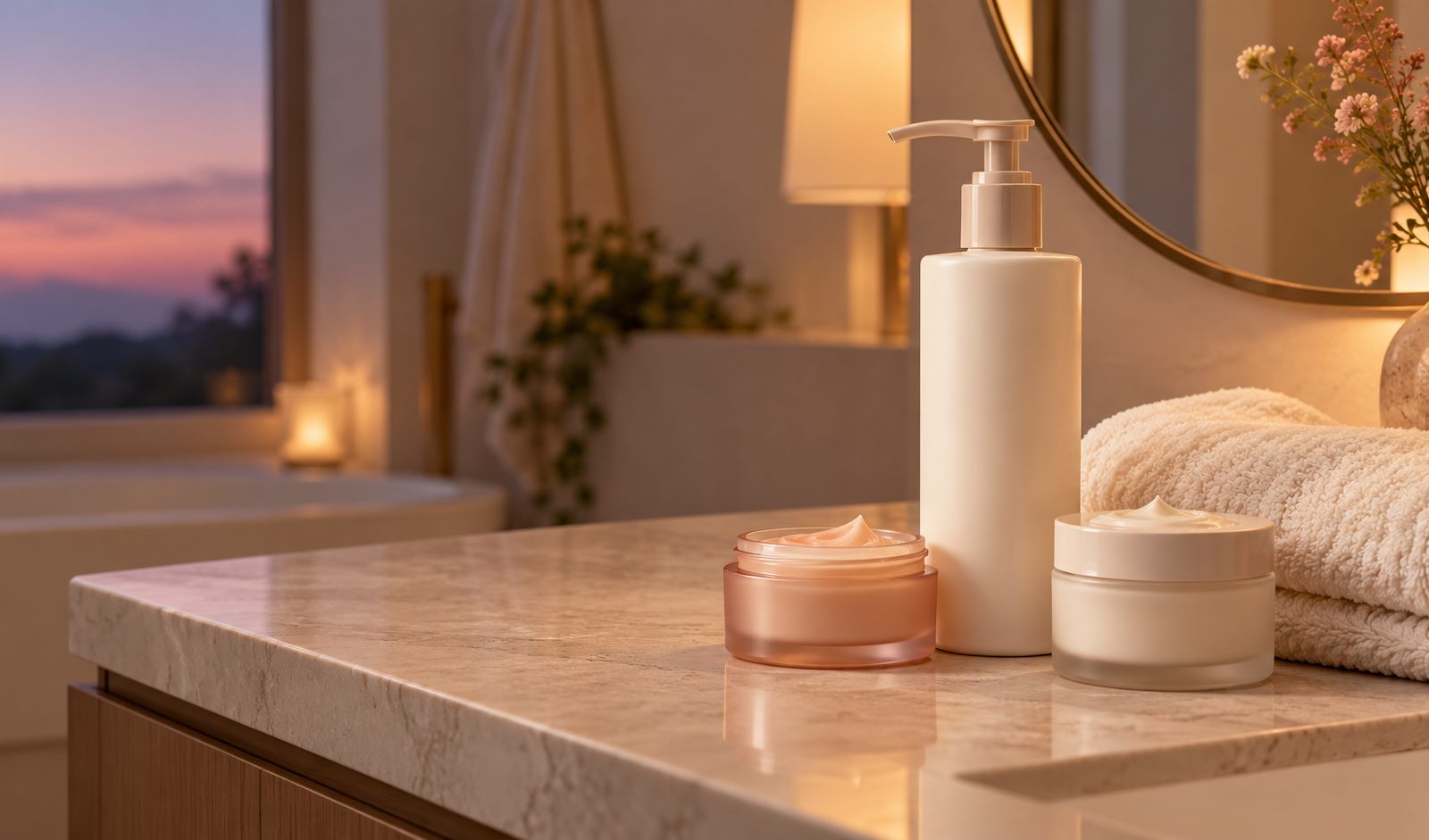
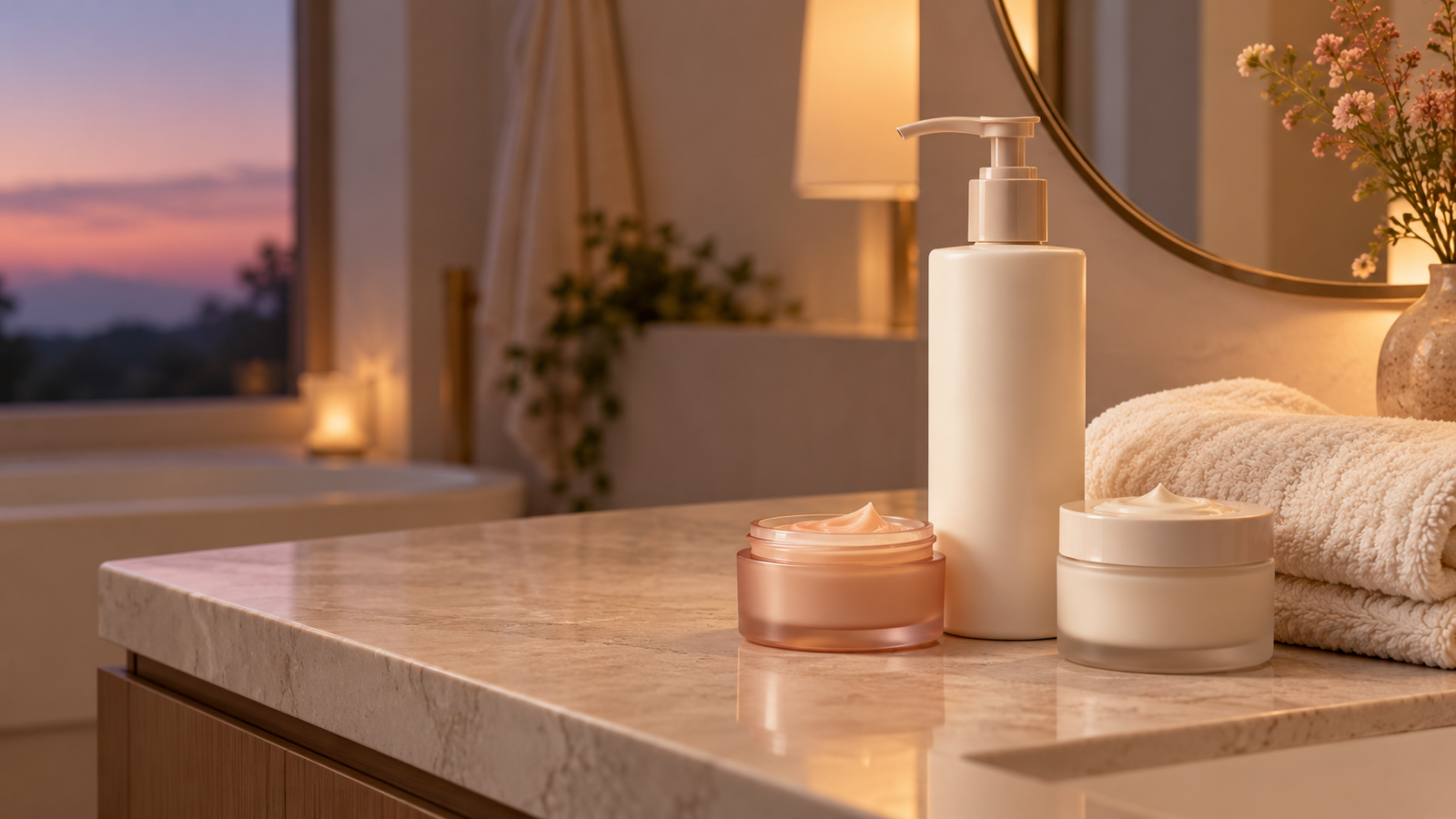
A good evening skincare routine does not have to take half an hour. For many beginners, the most useful place to start is removing makeup, sunscreen, and the day’s buildup with a gentle cleanse, then using moisturizer if needed. Any prescribed skin medication belongs in the routine exactly as directed by the clinician who recommended it.
The goal is a routine that feels comfortable and is easy to repeat—not a shelf full of products. Here is a straightforward order, a quick version for tired nights, and a few tips for choosing products without overcomplicating things.
The simple three-step evening routine
1. Remove makeup and cleanse gently
If you wore makeup or sunscreen, remove it before bed. Choose a cleanser that feels gentle on your skin. Use lukewarm water and your fingertips, then rinse and pat dry with a clean, soft towel. Avoid scrubbing or using rough tools to make your face feel “extra clean.”
If one cleanser does not remove your makeup comfortably, you may use a makeup-removing product first and follow with a gentle cleanser. A two-step cleanse is optional; it is not a requirement for everyone. If a product stings or leaves your skin feeling tight, consider stopping it and choosing a gentler option.
The American Academy of Dermatology recommends gentle, non-abrasive cleansing and washing before bed to remove makeup and everyday grime. It also cautions that scrubbing can irritate skin.
2. Use a prescribed treatment, if you have one
If a healthcare professional prescribed a topical medicine or gave you specific application instructions, follow those directions. The general order recommended by the AAD is to cleanse first, apply medication or treatment, then use moisturizer and/or sunscreen as appropriate to the time of day.
If you are not using a prescribed treatment, you do not need to add an active ingredient just because a routine online includes one. Beginners can build consistency with cleansing and moisturizing before deciding whether another product fits their needs. Ask a qualified professional about persistent acne, rashes, pain, or ongoing irritation.
3. Moisturize if your skin feels dry or tight
Apply moisturizer after cleansing or after your prescribed treatment, following any clinician instructions. Lotions and gels tend to feel lighter; creams and ointments are richer. Choose a texture you are comfortable using. Applying moisturizer to slightly damp skin may make it easier to spread.
If you have oily skin, you may prefer a lighter formula. If your skin is dry, you may prefer a creamier texture. Product labels can help narrow choices, but they cannot predict exactly how your skin will respond. Introduce new products one at a time so you can tell what works for you.
What order should nighttime products go in?
For a basic evening routine, use this order:
- Makeup remover, if needed
- Gentle cleanser
- Prescribed medication or treatment, if directed
- Moisturizer, if needed
If a dermatologist or other healthcare professional gave you a different order, follow their instructions. You can leave out optional products; a beginner routine does not need a toner, essence, exfoliant, mask, eye cream, and several serums to be complete.
The two-minute routine for tired nights
When you are exhausted, keep the essentials easy to reach:
- Remove makeup and sunscreen.
- Cleanse gently.
- Apply moisturizer if your skin needs it.
If you use prescription skin medication, follow the schedule and application directions provided by your prescriber. A simple routine you can maintain is more practical than a complicated one you often skip.
How to choose products without overspending
Start with a gentle cleanser and a moisturizer that suits your preferred texture. If you wear makeup or sunscreen, choose a remover that takes it off without rough rubbing. You do not need the most expensive option: the AAD notes that skincare can be effective and budget-friendly, and that limiting the number of products can reduce both cost and the chance of irritation.
Before buying, read the label, check how to use the product, and think about what role it fills in your routine. Avoid buying several new products at once. If you are comparing products, compare like with like—such as texture, fragrance, packaging, and price per ounce—and do not rely on a product claim as a guarantee that it will suit your skin.
Common nighttime routine mistakes
- Going to bed in makeup: Remove makeup before bed using products that work for you.
- Scrubbing to remove every trace: Gentle cleansing is enough for routine washing; scrubbing can irritate skin.
- Adding multiple strong products at once: It can be difficult to know which one caused discomfort.
- Assuming a longer routine is better: Extra steps add cost and complexity without automatically improving a routine.
- Ignoring a persistent reaction: Stop a product that appears to cause an ongoing reaction and seek qualified advice if symptoms continue.
Frequently asked questions
Do I need to double cleanse every night?
Not necessarily. A first makeup-removing step followed by cleanser can be useful if it helps you remove makeup or sunscreen comfortably, but it is optional. Avoid rough rubbing, and choose a routine that leaves your skin comfortable.
Should I use moisturizer before or after retinol?
Product directions and clinician guidance matter. If you use a prescription retinoid, follow the prescriber’s instructions. For non-prescription products, follow the package directions and ask a dermatologist if you are unsure how to use them or if irritation persists.
Is a toner necessary at night?
No. Toner is an optional product, not a required step in a basic routine. Use one only if you have a clear reason and it feels comfortable for your skin.
What if my skin feels tight after cleansing?
That can be a sign the cleanser or routine is not comfortable for you. Consider switching to a gentler cleanser and avoid scrubbing. If discomfort or irritation continues, get advice from a qualified dermatologist.
The takeaway
A beginner evening routine can be simple: remove makeup if you wore it, cleanse gently, use prescribed treatments as directed, and moisturize if your skin needs it. Keep the routine practical, introduce new products gradually, and get professional help for persistent skin concerns.
Sources and further reading
- American Academy of Dermatology Association, Face washing 101
- American Academy of Dermatology Association, Should I apply my skin care products in a certain order?
- American Academy of Dermatology Association, Skin care on a budget
Related reading
You may also find our The Ultimate Glass Skin Routine: Hydration & Glow Secrets guide helpful.