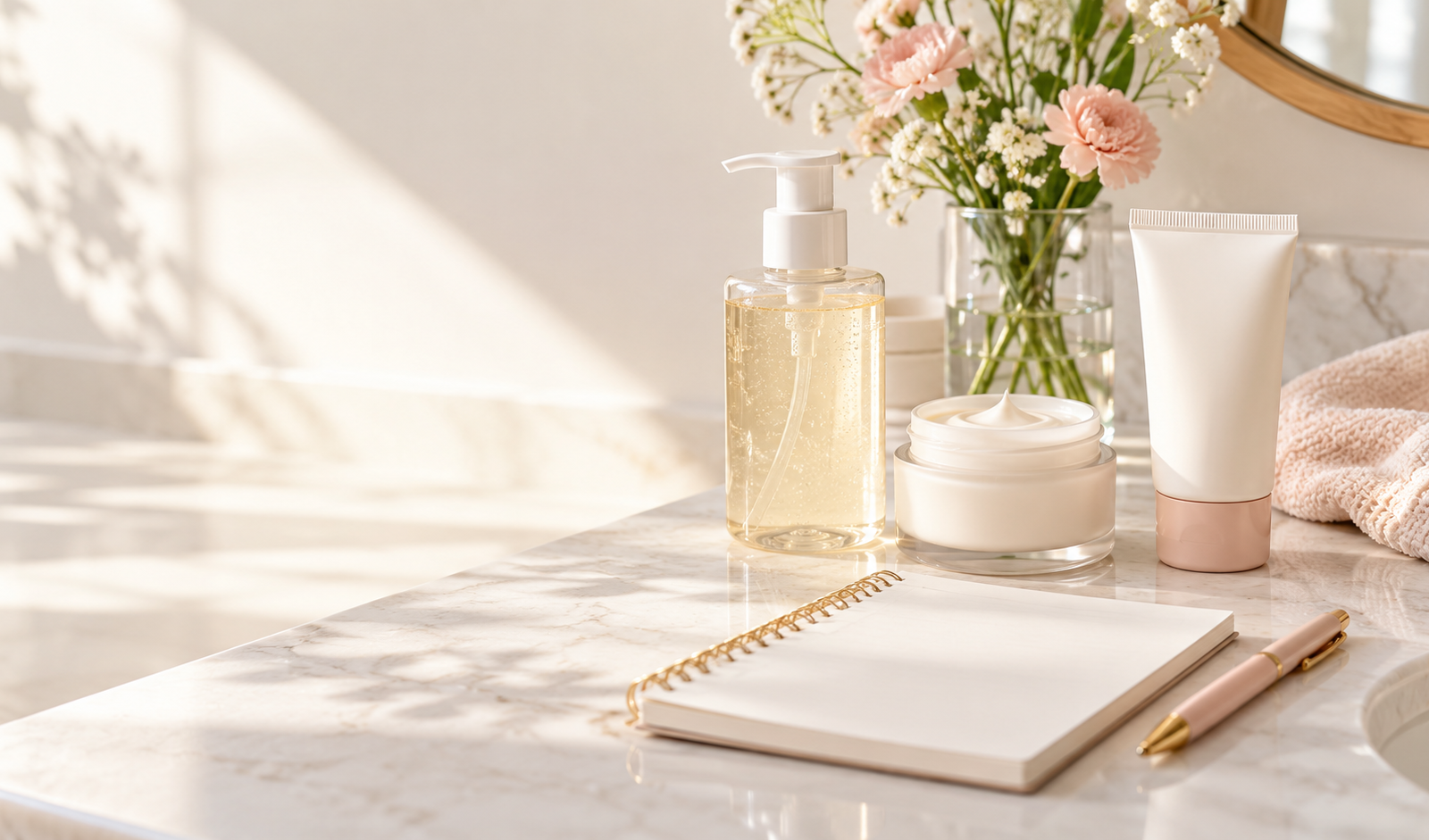
A skincare routine can become expensive when every trend seems to require another serum, mask, or device. A budget-friendly routine starts by deciding what you actually need, then comparing products by purpose, size, directions, and cost. You do not have to buy the most expensive option to build a useful basic routine.
This guide offers a simple starter plan and a shopping checklist to help you spend with intention. It does not recommend specific brands or claim that one product works for everyone.
Start with the basic routine
For many people, a practical starting routine includes:
- A gentle cleanser, or a rinse when that feels more comfortable
- A moisturizer if your skin needs one
- Broad-spectrum sunscreen for daytime outdoor exposure
The American Academy of Dermatology (AAD) recommends a simple approach centered on cleansing, moisturizing, and sun protection. It also notes that products do not need to be expensive to be effective. Your needs may differ if you have a skin condition or use prescription treatment, so ask a dermatologist about personalized care.
Make a needs-first shopping list
Before shopping, write down what you need a product to do. Examples include removing makeup, cleansing gently, moisturizing dry skin, or protecting exposed skin from the sun. Then check whether you already own a product that serves that purpose.
Use this quick filter:
- What problem or step does it address? If you cannot name one, you may not need it.
- Do I already have something similar? Avoid buying duplicates just because they are on sale.
- Can I follow the directions? Read the label and consider how often you will use it.
- Does the total cost fit my budget? Include shipping, replacement frequency, and any accessories.
- Am I buying from a reliable source? Be cautious with products that appear used, tampered with, or unusually discounted.
Compare products fairly
When comparing two similar products, look at the size, price per ounce, ingredients, directions, and packaging. A larger package may cost less per ounce but is only a good value if you can use it as directed before it expires or changes.
Consider the texture and format you will actually use. A product you enjoy applying may be a better everyday fit than a cheaper item that stays unopened. Read the full label, especially if you have known sensitivities or medical instructions.
Spend where it fits your routine
Cleanser
Choose a gentle cleanser that removes the products you use without making your skin feel uncomfortable. If you wear makeup or sunscreen, decide whether you need a separate makeup-removing step or whether your cleanser is enough.
Moisturizer
Choose a texture that feels comfortable. A lotion or gel may feel lighter; a cream may feel richer. You do not need to buy separate products for every area unless there is a clear reason.
Sunscreen
For daytime outdoor plans, look for broad-spectrum sunscreen and follow the product directions. The AAD recommends broad-spectrum, water-resistant sunscreen with SPF 30 or higher. Use shade, clothing, and a hat as additional sun-protection measures.
Ways to save without cutting useful steps
- Use products as directed instead of applying more than needed.
- Finish what you already own before buying a replacement, if it is still suitable and not causing a reaction.
- Compare prices per ounce and check shipping costs.
- Avoid buying a full routine from a viral trend.
- Skip duplicate products and optional steps that do not serve a purpose.
- Look for fragrance-free or other specific product features only when they match your needs.
- Avoid products from sources where packaging may be used, diluted, or counterfeit.
What not to do to save money
Do not use a product past its safe-use period just to avoid replacing it, and do not share products or applicators in ways that could contaminate them. Do not replace sunscreen with an unverified DIY formula. If a product causes a reaction, stop using it and seek professional guidance if the reaction persists.
Frequently asked questions
How much should I spend on skincare?
There is no universal budget. Decide what you can comfortably spend, prioritize the steps you actually use, and compare options by size, directions, and cost. A higher price does not guarantee a better fit.
What are the most important skincare products to buy first?
A gentle cleanser, moisturizer if needed, and sunscreen for daytime outdoor exposure are a practical starting point for many people. Individual needs vary, especially when a person has a skin condition or prescription treatment.
Is drugstore skincare as good as expensive skincare?
Price alone cannot tell you whether a product will suit you. Compare its purpose, formula, label, directions, and cost, then choose what fits your needs and budget.
Should I buy skincare bundles?
Only if you want and can use the products included. Check every item’s purpose, directions, and value; a bundle is not automatically a saving if it contains products you do not need.
The takeaway
Build a skincare budget around a few useful steps, not a long shopping list. Decide what each product needs to do, compare similar options, and skip purchases that do not fit your routine. For medical concerns or treatment advice, speak with a qualified healthcare professional.
Sources and further reading
- American Academy of Dermatology Association, Skin care on a budget
- U.S. Food and Drug Administration, Shelf Life and Expiration Dating of Cosmetics
- U.S. Food and Drug Administration, FDA Authority Over Cosmetics
Related reading
You may also find our 7 Tips To Make Your Skin Glow Without Using Makeup guide helpful.