SEO title: How to Make a Weekly Meal-Planning Board That Works
Meta description: Make a practical weekly meal-planning board with a simple dinner grid, pantry check, flexible leftovers, and a shopping list that fits your household.
Suggested slug: weekly-meal-planning-board
Primary search intent: Informational
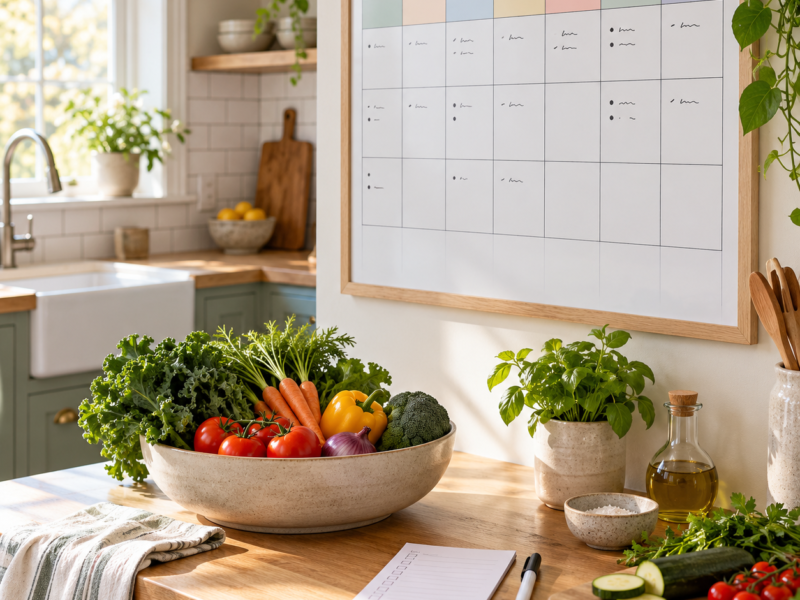
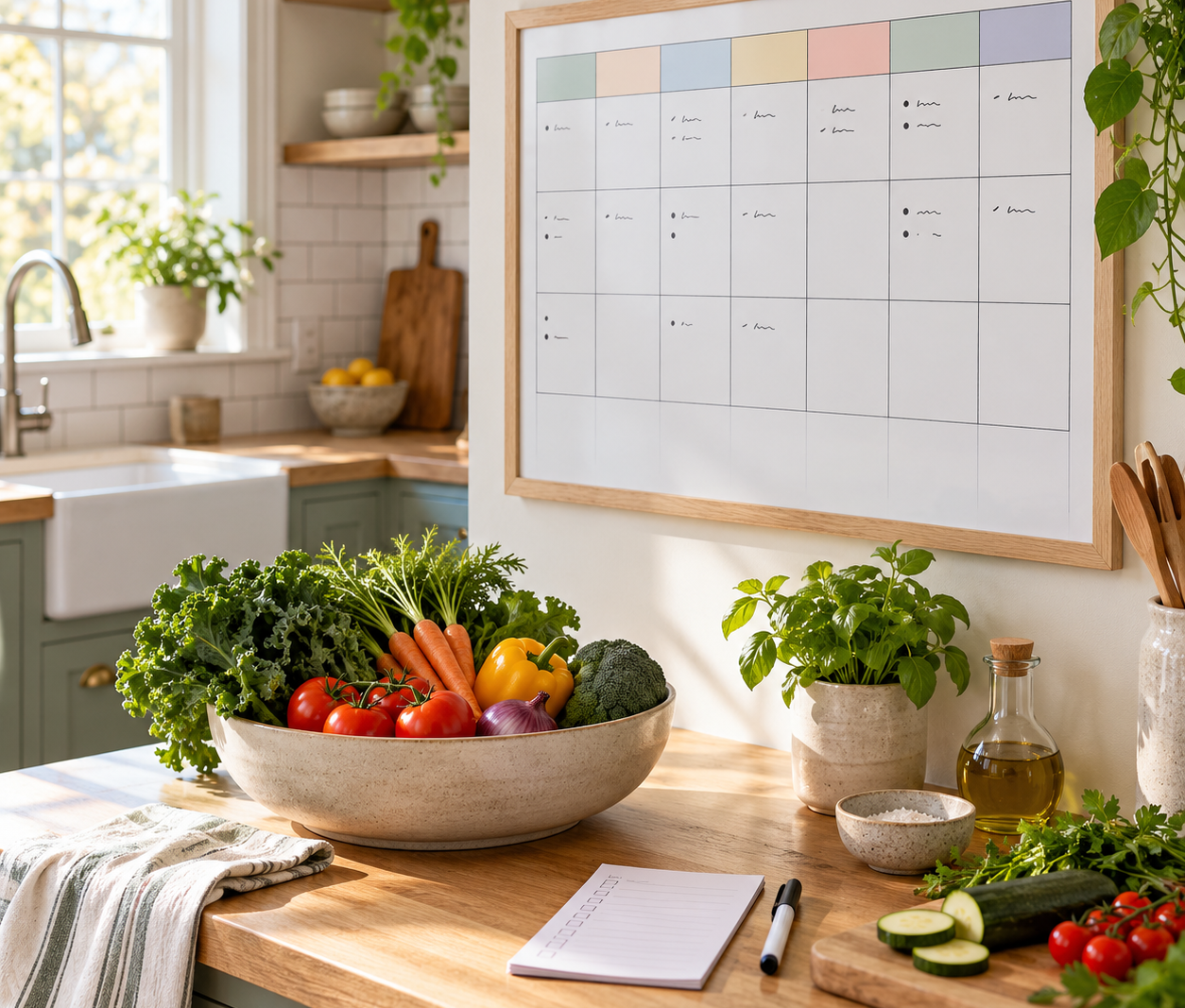
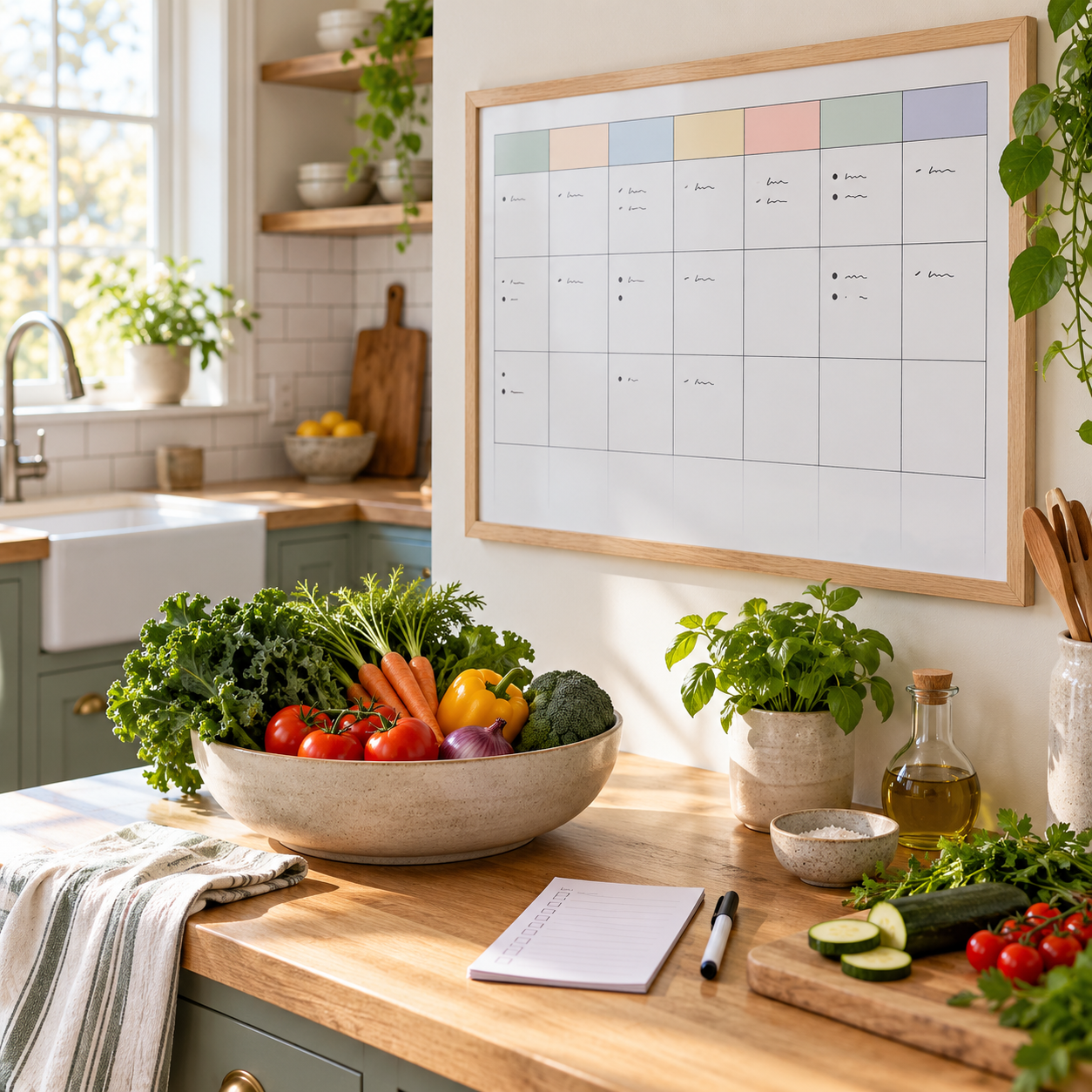
Image alt text: A weekly meal-planning board with blank meal sections, a shopping list, and a marker in a bright kitchen.
A weekly meal-planning board can make it easier to see what you might cook and what groceries you need. It does not have to be decorative or cover every meal. A simple dinner plan with room for leftovers and schedule changes is often more useful than a detailed menu you cannot follow.
Choose a board format
Use a whiteboard, chalkboard, paper pinned to the fridge, or a shared digital note. Pick a format everyone in the household can read and update. If you use a physical board, place it somewhere convenient but away from heat, steam, or splashes.
Add a simple weekly grid
Create one line for each day and plan only the meals that need advance thought. Mark one night for leftovers, one for a quick meal, and leave a day flexible. If lunch and breakfast are predictable, you may not need to plan them in detail.
| Day | Meal idea | Prep note |
|---|---|---|
| Monday | ||
| Tuesday | ||
| Wednesday | ||
| Thursday | ||
| Friday | ||
| Saturday | ||
| Sunday |
Check your pantry before writing a shopping list
Look at the freezer, refrigerator, and cupboards first. Add meals that use ingredients you already have, then write only the missing items. Note quantities if you know them and group the list by store section to make shopping easier.
Plan around time and energy
Use one or two simple meals for your busiest days. Schedule recipes that need more preparation when you have more time. Consider ingredients that can be reused across meals, such as cooked grains or vegetables, while following safe handling and storage guidance. FoodSafety.gov recommends refrigerating perishable foods promptly and keeping the refrigerator at 40°F (4°C) or below. FoodSafety.gov: 4 Steps to Food Safety
Make the board flexible
Leave one meal as “leftovers,” “freezer meal,” or “choose later.” If plans change, erase and adjust instead of letting food go unused. Keep a small list of household favorites so you have backup ideas on busy weeks.
Keep it easy to maintain
At the end of the week, erase completed meals, note any ingredients that should be used soon, and start a fresh list. If a board becomes visual clutter, reduce it to dinner ideas and a shopping list.
Frequently asked questions
What should I put on a meal-planning board?
List meals that need planning, prep notes, and a shopping list. Include a flexible or leftover night if it suits your household.
How far ahead should I plan meals?
A week is a convenient starting point for many households, but plan for the amount of time that matches your shopping routine and schedule.
How do I meal plan without wasting food?
Check what you already have, plan flexible meals, reuse ingredients where appropriate, and adjust the board as your week changes. Store perishables safely and follow food safety guidance.
Editorial note: Add a real author byline. Validate storage advice, recipe details, and product claims before publication.
References: FoodSafety.gov: 4 Steps to Food Safety
Related reading
You may also find our 7-Day Anti-Inflammatory Meal Plan for Glowing Skin & Gut Healing guide helpful.