SEO title: How to Make a Weekly Self-Care Planner That Fits Real Life
Meta description: Create a simple weekly self-care planner with flexible time, small habits, and realistic reminders that support your routine without adding pressure.
Suggested slug: weekly-self-care-planner
Primary search intent: Informational
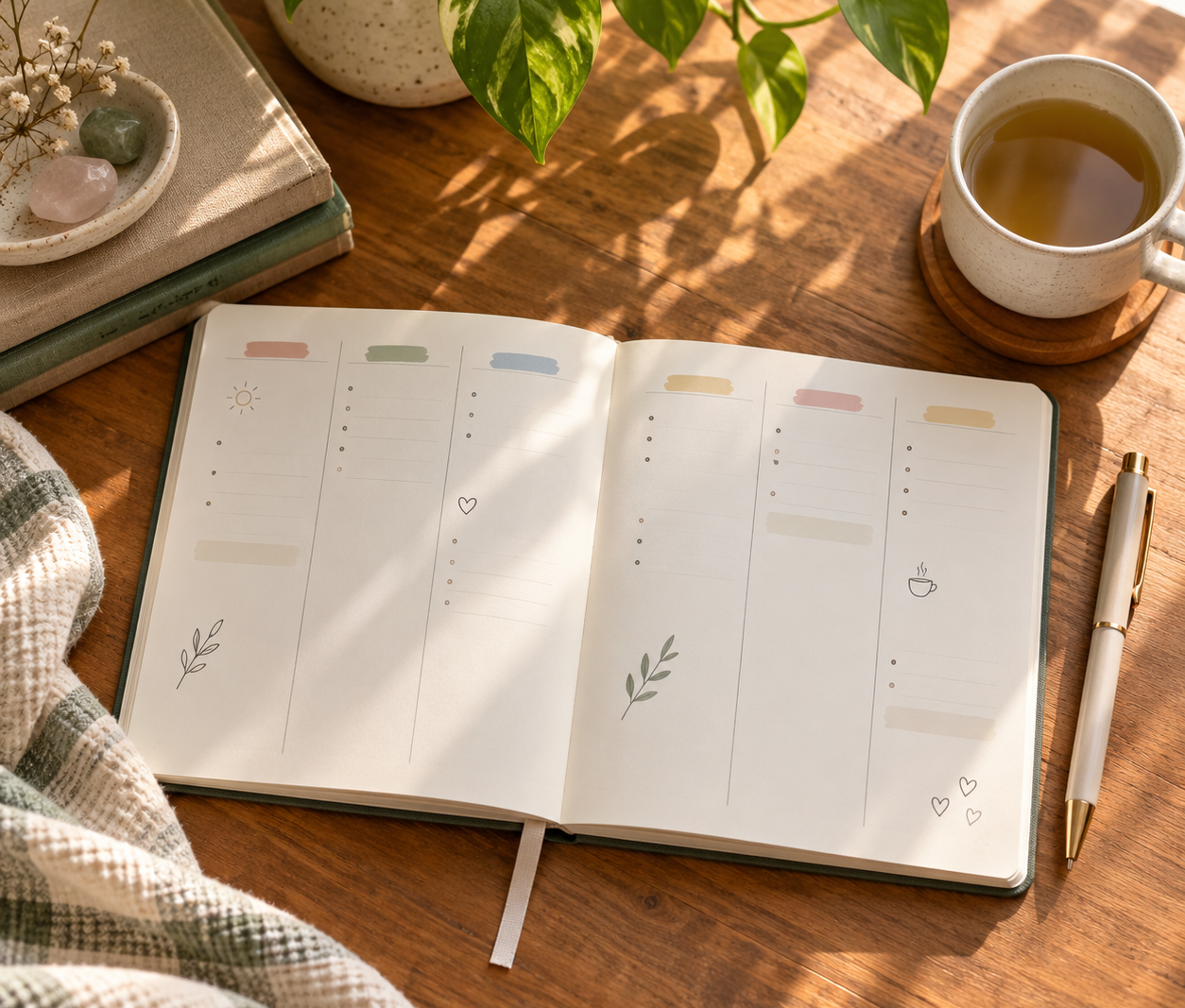
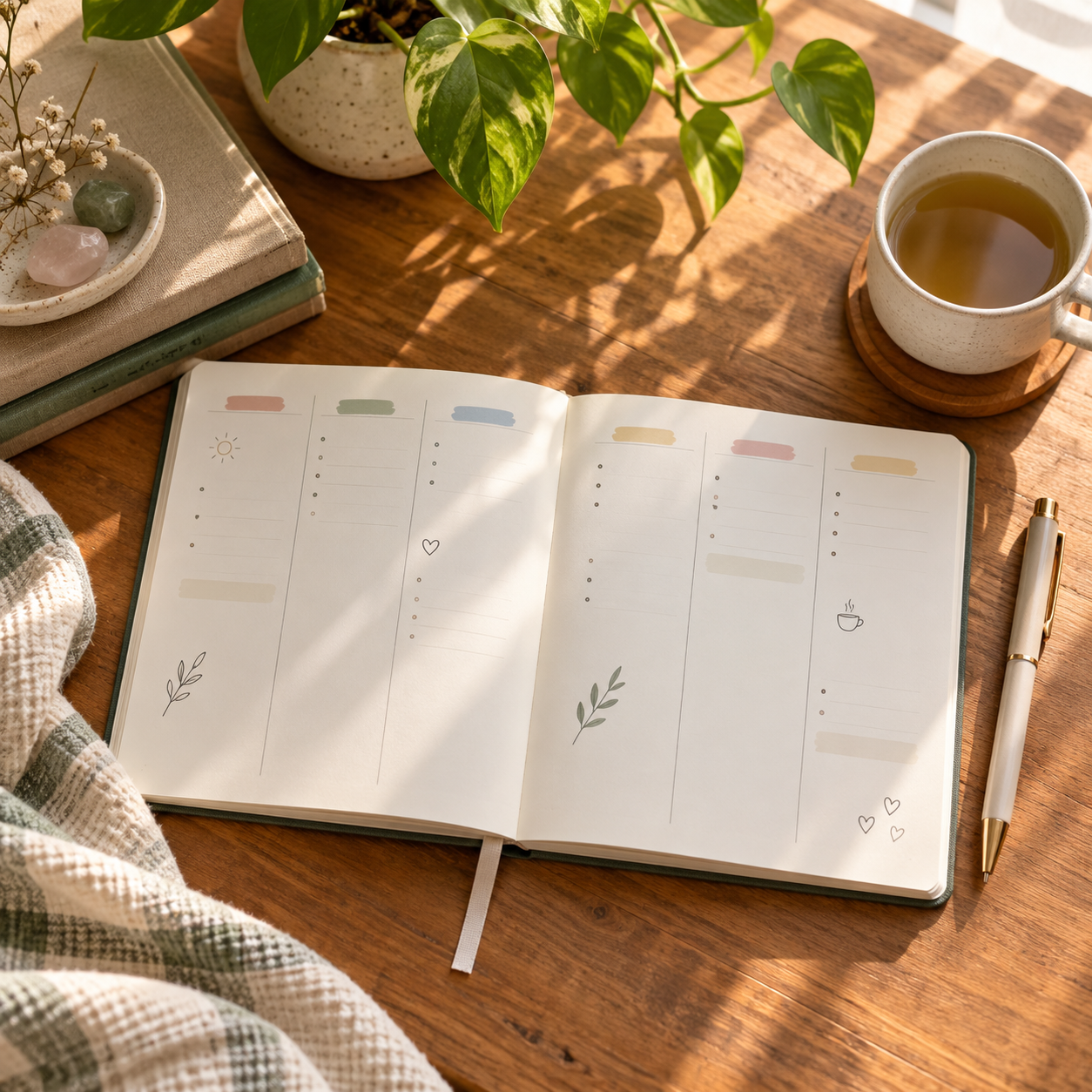
Image alt text: An open weekly planner with simple self-care notes, pen, and cup of tea on a desk.
A weekly self-care planner is a place to make room for practical needs and enjoyable activities. It should help you notice what matters, not turn rest into another task to fail. You can make one on paper, in a notes app, or on a calendar you already use.
Start with a simple weekly view
Draw seven columns or list the days of the week. Add existing commitments first: work, school, caregiving, appointments, and travel. This shows how much time is actually available. Leave open space instead of planning every hour.
Choose a few types of self-care
Self-care can be practical, social, restful, creative, or movement-based. It may include scheduling a routine appointment, cooking something simple, calling a friend, reading, or taking a short walk. Pick activities that suit your needs and abilities; no category is mandatory.
Add one small action at a time
Choose two or three actions for the week and place them where they realistically fit. For example, plan a short walk after lunch on one day and a low-effort meal on another. Keep a backup version for busy days, such as reading one page instead of a full chapter.
Use prompts that make planning easier
- What is one thing I need to do for future me?
- What is one activity I enjoy and want to protect time for?
- Which day looks crowded, and what can be simplified?
- Who could I ask for help if I need it?
- What can I remove from the plan if the week changes?
Make the planner flexible
Mark optional activities with a symbol or color. If plans change, move or remove them without treating it as failure. At the end of the week, notice what felt useful and what created pressure. Edit the next plan based on what you learned.
A simple weekly planner layout
| Day | Existing commitment | Small care action | Optional note |
|---|---|---|---|
| Monday | |||
| Tuesday | |||
| Wednesday | |||
| Thursday | |||
| Friday | |||
| Saturday | |||
| Sunday |
Copy this layout into a notebook or create your own. The blank spaces are useful; they keep the planner from becoming crowded.
Frequently asked questions
What should I include in a self-care planner?
Include existing commitments, one or two activities that matter to you, and some open time. Practical tasks and enjoyable activities can both count.
How many self-care activities should I schedule?
Start with a few realistic actions per week. There is no required number; a plan should fit your time and energy.
What if I do not follow the plan?
Treat it as information. Move, simplify, or remove the activity and build a plan that fits what actually happened. If you are dealing with persistent distress, a planner is not a substitute for professional support.
Editorial note: Add a genuine author byline. Avoid presenting planning as treatment or making unsupported mental-health claims.
Related reading
You may also find our The Sunday Reset Blueprint: 10 Intentional Steps to Organize Your Week & Protect Mental Energy guide helpful.