A facial cleanser should fit your routine and leave your skin comfortable after washing. But product shelves are full of terms like gel, cream, foaming, hydrating, and “for sensitive skin.” Instead of choosing by marketing language alone, start with how your skin feels and what you need the cleanser to remove.
This guide explains common cleanser formats, a simple way to compare labels, and signs that a product may not be right for you. It is general information; a dermatologist can give advice tailored to a skin condition or ongoing irritation.
Start with what you need the cleanser to do
Think about when you will use the cleanser and what you need it to remove:
- A morning cleanse may be optional if rinsing with water feels more comfortable.
- An evening cleanser can remove dirt, oil, and everyday residue.
- If you wear makeup or water-resistant sunscreen, you may prefer a separate remover before cleansing.
- After exercise or heavy sweating, washing can help remove sweat and buildup.
A cleanser does not need to make your face feel squeaky-clean. The American Academy of Dermatology recommends a gentle, non-abrasive cleanser and advises against scrubbing because it can irritate skin.
Common facial cleanser types
Gel cleansers
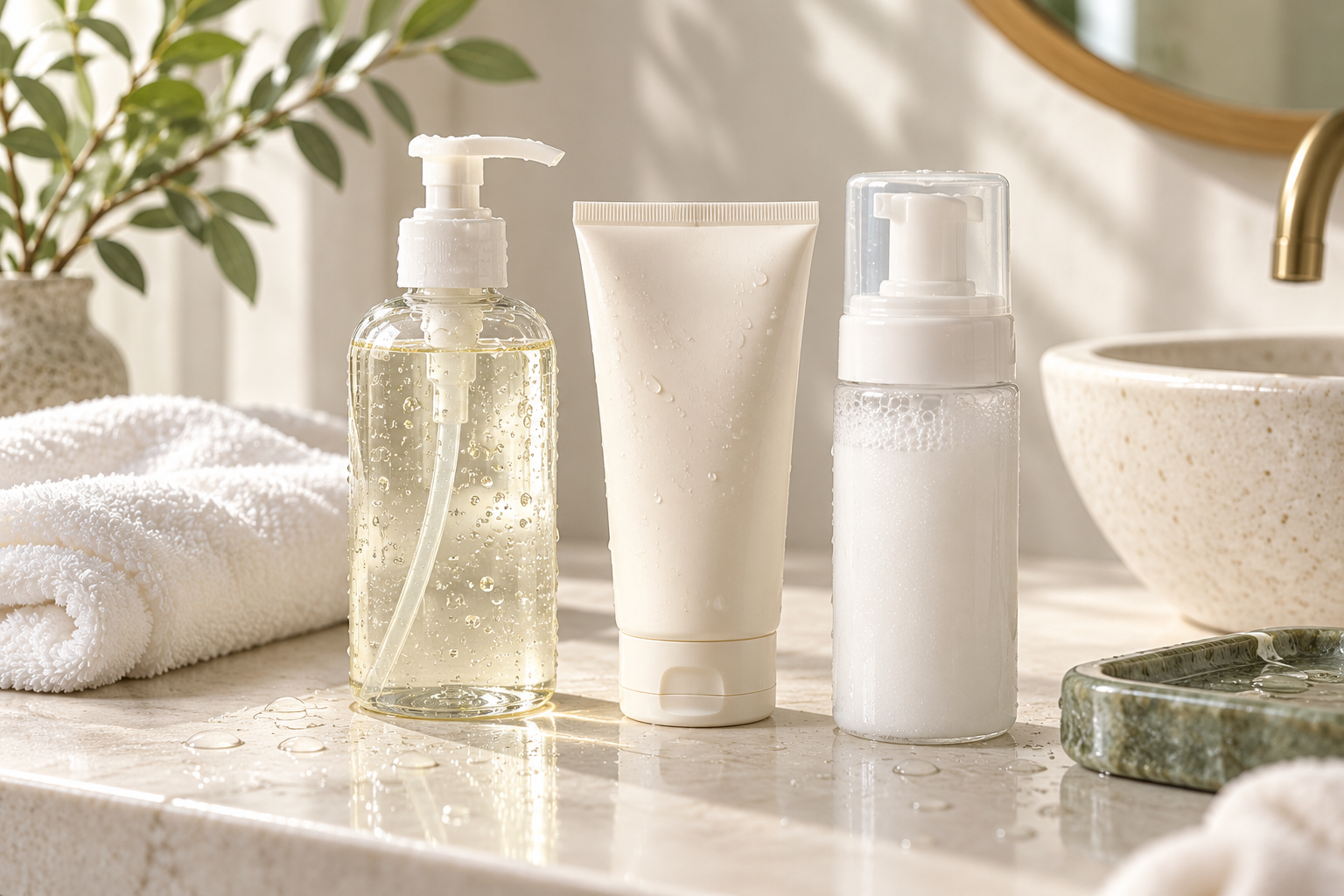
Gel cleansers have a lightweight texture and may rinse away easily. Formulas vary, so check the directions and choose based on how your skin feels after use. A gel is not automatically better for oily skin or worse for dry skin.
Cream or lotion cleansers
Cream and lotion cleansers often feel less foamy and may suit someone who prefers a softer wash. Look at the ingredients and directions, and decide whether the texture removes the products you use without leaving your skin uncomfortable.
Foaming cleansers
Foaming cleansers create lather, which some people enjoy. The presence of foam alone does not tell you whether a cleanser will be gentle or suitable. Try to judge by the full formula and your skin’s response rather than the amount of bubbles.
Oil or balm cleansers
Cleansing oils and balms can be used to loosen makeup or sunscreen as a first step, depending on the product directions. They are optional. If you use one, follow with a cleanser only if needed to remove residue comfortably.
A practical cleanser shopping checklist
Before buying, ask:
- Does it match my routine? Consider whether you need a morning wash, makeup removal, or an evening cleanse.
- Are the directions clear? Check how long to use it and whether it should be rinsed away.
- Does it fit my preferences? Texture, scent, packaging, and price can affect whether you will actually use it.
- Can I identify the full ingredients? Read the label if you have known sensitivities or a clinician’s instructions.
- Does it leave my skin comfortable? Stop using a cleanser that causes a persistent reaction and seek professional advice if needed.
If you tend to break out, you may see labels such as “non-comedogenic” or “won’t clog pores.” These can help narrow options, but they do not guarantee a particular result for every person.
How to use a facial cleanser
Wet your face with lukewarm water. Apply the cleanser with your fingertips and gently massage it over your skin. Rinse well and pat dry with a clean towel. Avoid harsh scrubbing or using rough tools.
The AAD recommends washing the face when you wake up, before bed, and after sweating heavily, while also noting that washing too often can irritate skin. If cleansing twice a day leaves your skin uncomfortable, adjust your routine or ask a dermatologist for tailored guidance.
Signs you may want to switch cleansers
A cleanser may not be a good fit if your face repeatedly feels tight, stings, or becomes irritated after you use it. Other products in your routine, weather, and skin conditions can also affect how your skin feels, so a cleanser is not always the only cause.
If you notice an ongoing reaction, stop the product and consider asking a qualified healthcare professional. Do not keep using a product that causes persistent irritation just because it is labeled “gentle.”
Frequently asked questions
Should I use a foaming or non-foaming cleanser?
There is no universal answer. Choose a formula that removes what you need it to remove and leaves your skin comfortable. Foam alone does not determine whether a cleanser is suitable for you.
Do I need an oil cleanser and a regular cleanser?
Not everyone does. A first makeup-removing step may help if you wear makeup or sunscreen, but it is optional. Avoid adding steps that do not solve a real problem in your routine.
Should I wash my face in the morning?
Some people prefer a gentle morning cleanse; others rinse with water. Pay attention to comfort and adjust if your skin feels dry or irritated. A dermatologist can advise if you have a skin condition.
Does an expensive cleanser work better?
Price does not guarantee that a cleanser will be a better fit. Compare the formula, directions, size, and price, and choose one you can use comfortably and consistently.
The takeaway
Choose a cleanser by its purpose, directions, and how your skin feels—not by foam or price alone. Use lukewarm water, gentle fingertips, and avoid scrubbing. If a product repeatedly irritates your skin, stop using it and ask a qualified professional for help.
Sources and further reading
- American Academy of Dermatology Association, Face washing 101
- American Academy of Dermatology Association, Skin care on a budget
Related reading
You may also find our 12 Essential Skin Care Tips For Teenagers guide helpful.