A leave-in conditioner can make detangling and styling easier for some people, but not everyone needs one. If you are comparing sprays, creams, and lotions, start with your hair type and the way you style it. Choose a product made for your hair, follow its directions, and begin with a small amount.
The American Academy of Dermatology (AAD) says leave-in conditioner may be helpful for hair that is long, curly, dry, brittle, color-treated, permed, heat-styled, tangled, or frizzy. It also recommends choosing a formula created for your hair type. Here is a practical way to compare options.
What does leave-in conditioner do?
Leave-in conditioner is designed to remain in the hair after washing. Depending on the formula, it may help with detangling, smoothness, frizz, or manageability. It is different from rinse-out conditioner, which is made to be washed out.
Do not pour rinse-out conditioner into a spray bottle and leave it in your hair. The AAD cautions that rinse-off and leave-in formulas have different chemistry and should be used for their intended purpose.
Choose a format that suits your hair
Spray leave-in conditioner
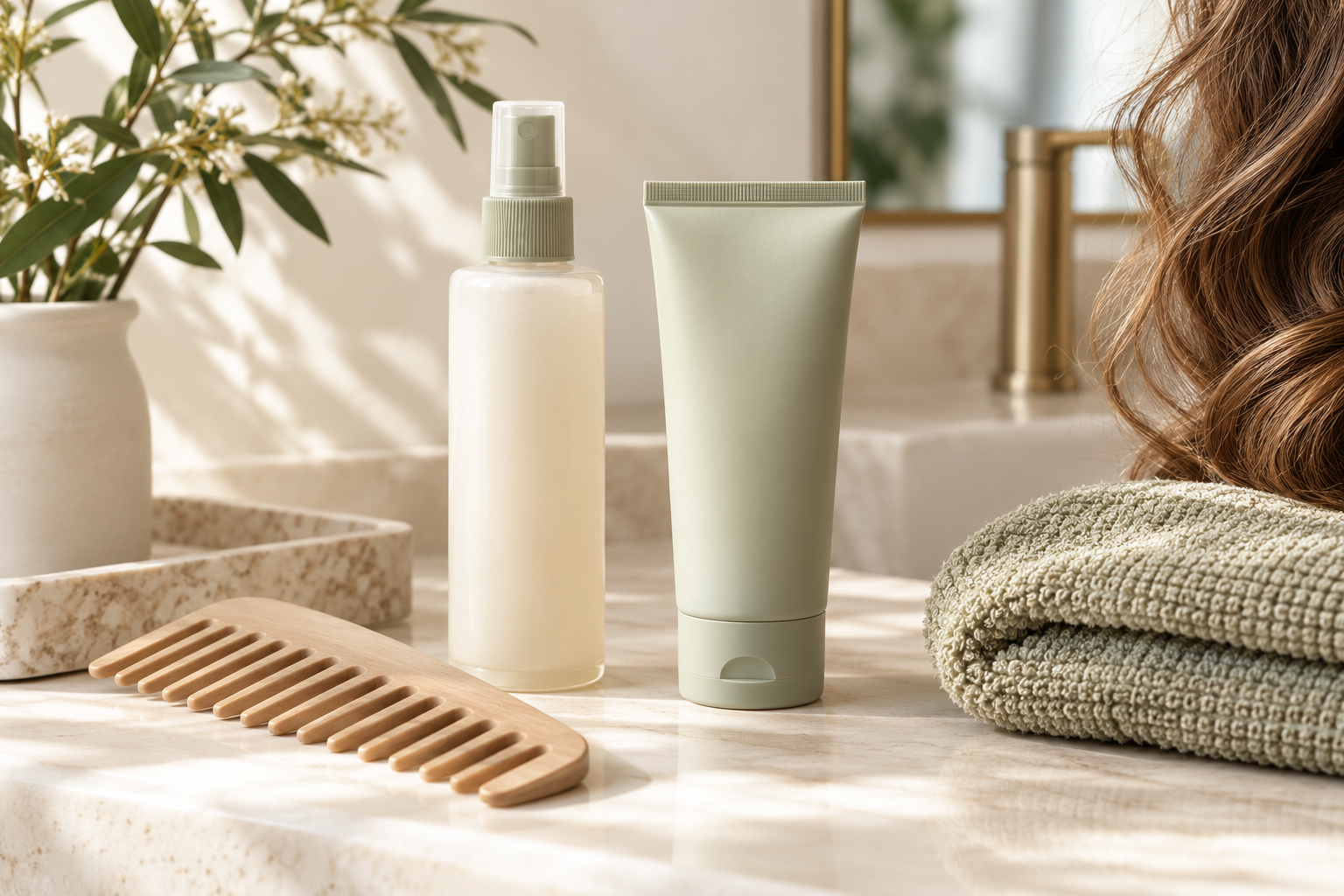
A spray can be convenient for distributing a light amount through damp hair. It may suit someone who wants a lightweight finish or a quick detangling step. Follow the label and spray only as much as needed.
Cream or lotion leave-in conditioner
A cream or lotion can feel richer and may suit hair that needs more conditioning. The AAD recommends using a small amount and applying it where the hair is dry, frizzy, brittle, or tangled—typically from mid-lengths to ends rather than directly to the scalp.
Heat-protectant leave-in conditioner
Some leave-in conditioners are also labeled as heat protectants. Only rely on that benefit when the product explicitly says it is designed for heat protection, and follow its directions. A regular leave-in conditioner should not automatically be treated as a heat protectant.
Match the product to your hair and routine
- Fine or straight hair: A lighter formula may help avoid a weighed-down feel. Start with a small amount.
- Curly or coily hair: A richer conditioner may be easier to distribute through the lengths, depending on your hair.
- Long or tangled hair: A detangling formula may fit your routine.
- Color-treated or heat-styled hair: A leave-in may be useful for manageability; check whether the product specifically offers heat protection if you use hot tools.
- Hair that gets oily or limp quickly: Use less, keep it away from the scalp, or skip the product if it does not suit you.
These are general starting points, not guarantees. Hair varies, and the product label should guide use.
How to apply leave-in conditioner
- Shampoo and use rinse-out conditioner as part of your usual wash routine.
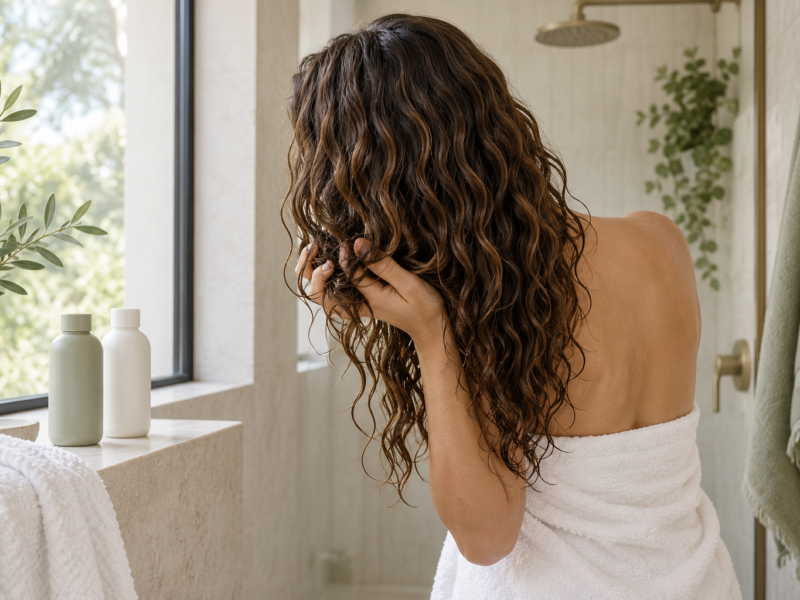
- Gently towel-dry your hair so it remains damp, not dripping.
- Start with a small amount of leave-in conditioner.
- Apply it through the hair where you need it, usually from mid-lengths to ends.
- Comb or style gently, following the product directions.
The AAD advises applying leave-in to damp hair and using the smallest amount that does the job. Applying too much can make hair look greasy or feel heavy. Avoid putting it directly on the scalp unless the label specifically says to.
How to compare products before buying
- Check whether the product is a spray, cream, or lotion.
- Confirm it is designed for your hair type.
- Look for clear instructions about amount and placement.
- If you use heat, check for explicit heat-protection labeling.
- Compare the product size and price per ounce.
- Avoid claims that promise guaranteed growth, repair, or results for every hair type.
If you are shopping online, read the full ingredient list and reviews as one part of your decision—not as a guarantee that the product will suit you. Do not claim the product was tested personally unless you have actually used it.
Frequently asked questions
Do I need leave-in conditioner if I already use regular conditioner?
Not necessarily. Some people find a leave-in useful, especially if their hair is long, curly, dry, color-treated, heat-styled, or prone to tangling. It is optional, and the AAD recommends choosing a formula for your hair type.
Can I use rinse-out conditioner as a leave-in?
No. Rinse-out and leave-in conditioners are formulated for different uses. Use each product according to its directions.
Should leave-in conditioner go on the scalp?
The AAD recommends applying it to the hair rather than the scalp, since scalp application can cause buildup or irritation. Follow the directions for your product.
How much leave-in conditioner should I use?
Start with a small amount and follow the label. Fine hair may need less; thicker hair may need more. Add gradually only if needed.
The takeaway
Choose a leave-in conditioner by format, hair type, and the job you want it to do. Start with a small amount on damp hair, focus on the lengths, and use only products that are clearly labeled for the benefit you want. If hair or scalp problems persist, consult a qualified professional.
Sources and further reading
- American Academy of Dermatology Association, Dermatologists’ top tips for using leave-in conditioner
- American Academy of Dermatology Association, Tips for healthy hair
Related reading
You may also find our How Often Should You Wash Your Hair? guide helpful.