A small skincare collection can still make a bathroom counter feel crowded. The fix does not have to be a full vanity makeover. Start by keeping only the products you use, grouping them by routine, and choosing storage that fits the space you already have.
This guide focuses on practical organization: a quick product audit, simple storage zones, and a few ways to keep your daily routine easy to follow. The goal is to make your products easier to find and store according to their labels—not to buy more organizers than you need.
Step 1: Edit your collection before buying storage
Take everything out and sort it into three groups:
- Use often: products in your current morning or evening routine.
- Use sometimes: occasional masks, travel items, or seasonal products.
- Do not use: expired items, products you dislike, and anything that has changed in smell, color, or texture.
Check product directions and any expiration or period-after-opening information on the packaging. The FDA notes that a cosmetic’s usable life can depend on storage and use, and that consumers should keep containers and applicators clean. If you are unsure whether an old product is still suitable, check the manufacturer’s guidance rather than guessing.
Do not keep a product just because it was expensive. If you no longer use it, it takes up space and makes the items you do use harder to reach.
Step 2: Create simple routine zones
Group products by the moment you use them:
- Morning: cleanser or rinse, moisturizer, sunscreen, and makeup if applicable.
- Evening: makeup remover, cleanser, prescribed treatment if any, moisturizer.
- Occasional: products you use weekly or less often.
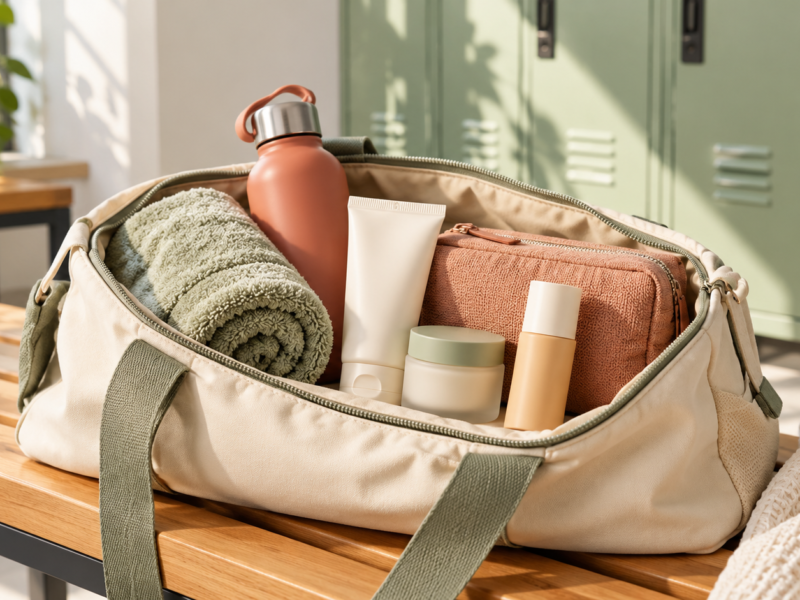
- Travel: small containers and a compact pouch.
Use a tray, drawer divider, or small basket to create these zones. Keep the products you reach for every day at eye level or in the easiest-to-reach spot. Place occasional products in a separate bin so they do not crowd your daily routine.
Step 3: Choose storage that fits your bathroom
The best storage depends on the space and the product packaging you already have. Consider:
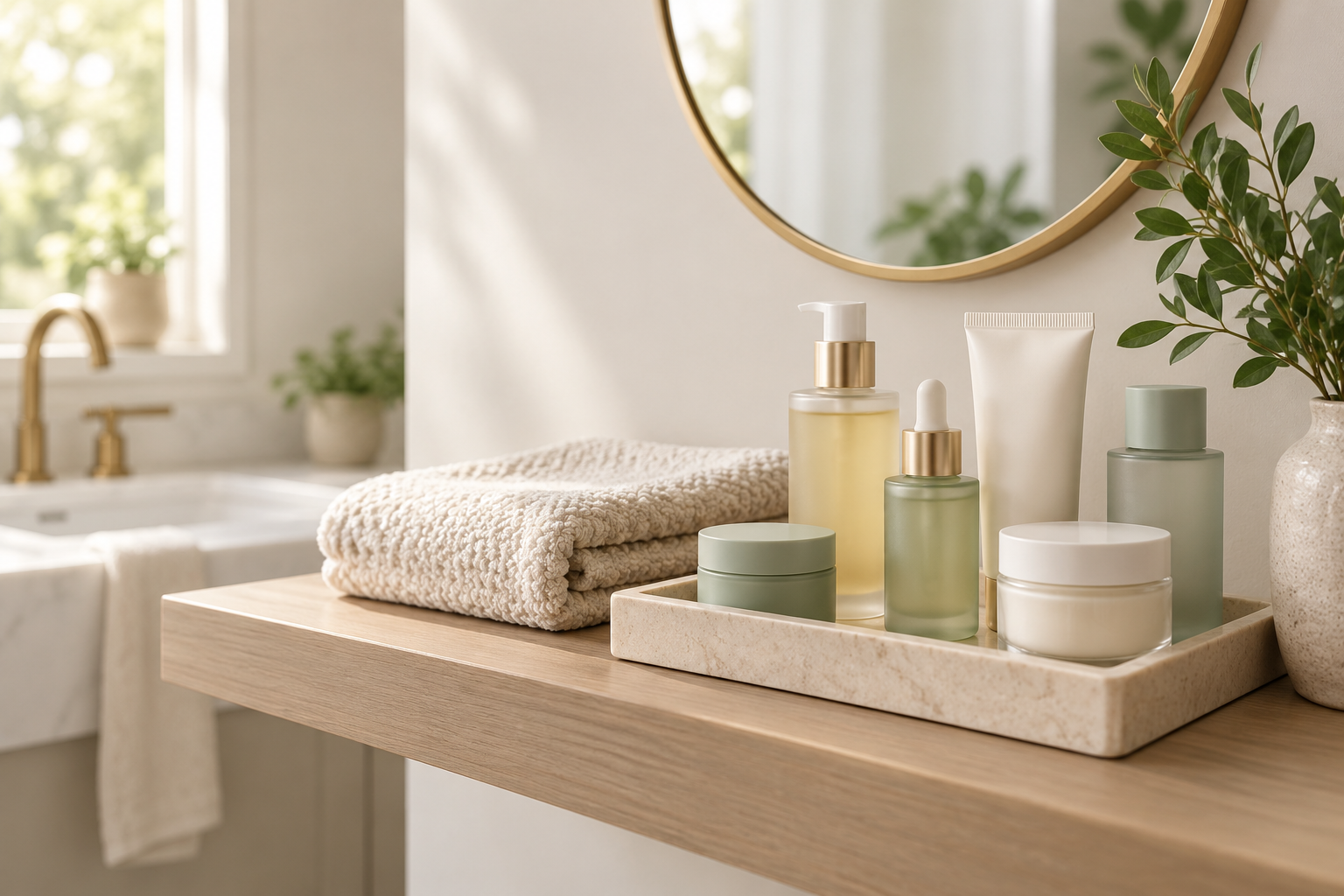
- A shallow tray for a countertop
- Drawer organizers for narrow drawers
- A small lidded basket for backup products
- A wall shelf if your counter is limited
- A washable pouch for travel-size items
Measure the space before buying an organizer. Check whether the item is easy to clean and stable enough for bottles or jars. Avoid placing products somewhere they could fall into a sink or shower.
Step 4: Store products according to their labels
Follow the storage directions printed on each product. Keep products closed, away from excess heat and direct sunlight when the label recommends it, and avoid storing them where they may get wet or contaminated. Do not leave open jars where water can splash into them, and avoid sharing applicators.
If a product changes noticeably in smell, color, or texture, stop using it and check the manufacturer’s advice. The FDA also recommends keeping cosmetic containers and applicators clean and storing products properly.
Step 5: Make a one-minute reset part of your routine
After getting ready, return each product to its zone, wipe up spills, and close every cap. Once a month, do a quick check for products you no longer use and containers that need cleaning. A small reset helps prevent the collection from slowly taking over the counter again.
Small bathroom skincare organization ideas
- Use a narrow tray instead of spreading products across the counter.
- Keep daily products in one basket that can be moved when cleaning.
- Store backups together so you do not accidentally open duplicates.
- Use a small label on a drawer divider if more than one person shares the space.
- Put travel sizes in one pouch so they are easy to pack and return.
- Keep products away from a spot where they are repeatedly splashed or heated.
Common organizing mistakes
- Buying bins before editing products: You may end up storing items you do not use.
- Decanting everything into unlabeled jars: It can be hard to identify products and remember directions.
- Storing products by color instead of routine: Pretty displays can be less practical if they slow you down.
- Keeping daily essentials out of reach: Store them where you naturally get ready.
- Ignoring the product label: Storage needs vary; follow the manufacturer’s directions.
Frequently asked questions
Should skincare be stored in the bathroom?
It depends on the product’s directions and the conditions in your bathroom. Keep containers closed and follow label storage guidance. If the room gets hot, humid, or frequently splashed, choose a drier storage spot for products whose instructions call for it.
How should I organize skincare in a small bathroom?
Start by editing the collection, then group daily products by morning and evening routine. Use a shallow tray, drawer divider, or small basket sized to your available space.
Should I keep skincare products in the refrigerator?
Only do so if the product label or manufacturer recommends it. Refrigeration is not necessary for every product and may not be appropriate for some formulas.
How often should I clean skincare organizers?
Wipe spills when they happen and clean trays or bins regularly as part of your bathroom routine. Keep product containers and applicators clean, following the product’s directions.
The takeaway
A tidy skincare setup starts with a small collection, clear routine zones, and storage that fits your space. Follow product labels, keep containers clean, and make a quick reset part of your routine. Buy organizers only after you know what you actually need to store.
Sources and further reading
- U.S. Food and Drug Administration, Shelf Life and Expiration Dating of Cosmetics
- U.S. Food and Drug Administration, Product Testing of Cosmetics
Related reading
For product choices that fit a small routine, see our facial cleanser guide.