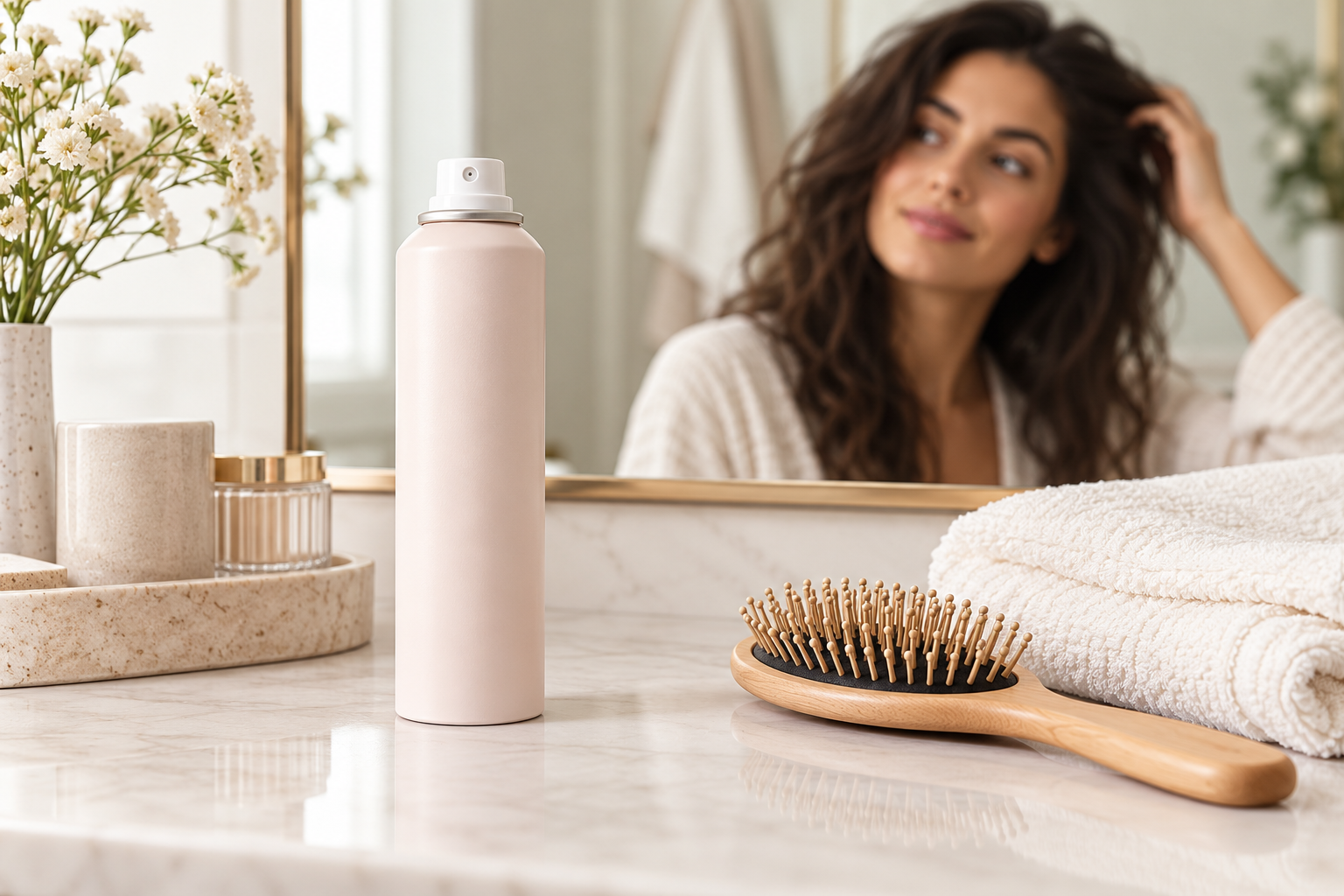
Dry shampoo can help hair look less oily between wash days, but it does not wash your hair. It absorbs some oil near the scalp; it does not remove all the dirt, dead skin, and product buildup that regular shampoo and water can rinse away.
The American Academy of Dermatology (AAD) recommends using dry shampoo as a between-wash styling aid, following the product directions, and continuing to wash with regular shampoo and water. Here’s how to use it thoughtfully and what to do if your scalp or hair does not like it.
What dry shampoo does—and does not do
Dry shampoo is designed to absorb oil and make hair look fresher between washes. Some formulas can add volume or help a style last longer. It is not a substitute for washing with shampoo and water, which cleans the scalp and hair.
If dry shampoo builds up, your scalp may feel itchy or uncomfortable, and your hair may look dull or feel stiff. Use it sparingly and keep regular washing as part of your routine.
How to use dry shampoo
- Start with dry hair. Follow the directions on the product you choose.
- Apply only where needed. Focus on the oily areas near the scalp rather than coating all your hair.
- Use a small amount first. You can add a little more if needed; too much may leave hair gritty or visibly powdery.
- Let it sit as directed. Different products have different instructions.
- Brush or distribute it as directed. This can help remove excess product and blend it through the hair.
- Wash with shampoo and water regularly. Dry shampoo is for in-between refreshes, not ongoing replacement of washing.
If the product leaves visible residue, feels uncomfortable, or is difficult to remove, stop and follow the label for removal. Do not make homemade dry shampoo from pantry powders; the AAD cautions that homemade mixtures can clump and irritate the scalp.
How to choose a dry shampoo
Compare products by your hair color, hair type, application format, scent preferences, and price. Some formulas are tinted for different hair colors. Read the directions and check the ingredient list if you have known sensitivities.
Aerosol and non-aerosol products may apply differently. If you use an aerosol, follow its safety directions and keep it away from heat or flame. Do not assume “natural,” “clean,” or “for sensitive scalp” guarantees a product will suit you.
Common dry shampoo mistakes
- Using too much: Start small and add only if needed.
- Spraying the entire length: Focus on the oily areas near the scalp, as directed.
- Expecting it to clean hair: It absorbs oil; it does not replace shampoo and water.
- Using it continuously without washing: Keep regular shampooing in your routine.
- Ignoring irritation: Stop using a product if you develop itching, burning, or discomfort. Ask a dermatologist if symptoms persist.
When to wash with regular shampoo
Wash your hair and scalp with regular shampoo and water based on your hair type and how oily or dirty it becomes. The AAD says that if dry shampoo is used, it is best to wash after one or two dry-shampoo uses rather than allowing buildup to continue indefinitely. Individual wash frequency can vary.
If you have an ongoing itchy, flaky, or irritated scalp, do not rely on dry shampoo to manage the problem. A dermatologist can help identify what is going on and suggest care.
Frequently asked questions
Does dry shampoo actually clean hair?
No. The AAD explains that dry shampoo absorbs oil but does not clean hair. Regular shampoo and water are needed to wash the hair and scalp.
How often can I use dry shampoo?
There is no single schedule that fits everyone. Use it according to its label and as an occasional between-wash aid. The AAD recommends washing with regular shampoo and water after one or two dry-shampoo uses.
Can I use dry shampoo on wet hair?
Dry shampoo is designed for dry hair. Follow the directions on the product label.
What if dry shampoo makes my scalp itch?
Stop using the product. If itching, burning, or irritation persists or worsens, contact a board-certified dermatologist.
The takeaway
Dry shampoo is a quick way to absorb oil and refresh the look of hair between wash days. Use a small amount as directed, keep it away from areas that do not need it, and continue washing your scalp and hair with regular shampoo and water.
Sources and further reading
- American Academy of Dermatology Association, Dry shampoo: Dermatologists’ tips for getting your best results
- American Academy of Dermatology Association, Tips for healthy hair
Related reading
You may also find our How Often Should You Wash Your Hair? guide helpful.