Open the cupboard before you order dinner. A bowl comes together when you give each ingredient one job: a base to fill it out, a protein, something that tastes fresh, and a sauce that links everything. The combinations below are starting points for the ingredients you already have.
Build the bowl in four moves
Start with cooked rice, couscous, or leftover potatoes. Add drained canned chickpeas or white beans, or cooked chicken if you have it. Pick a vegetable for contrast: sliced cucumber adds crunch, while warmed frozen broccoli makes the bowl feel more like dinner. Finish with a spoonful of a sauce you already enjoy. Taste a bite with all four parts before adding salt.
Three combinations you can make your own
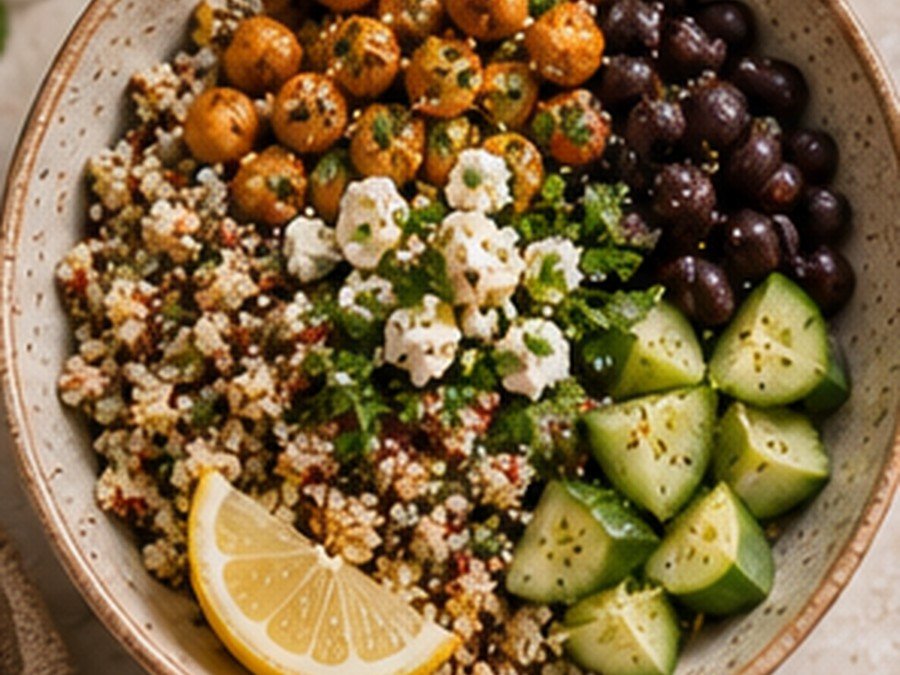
For a lemon-chickpea bowl, pair couscous with chickpeas, cucumber and a mix of lemon juice and olive oil. For a smoky bean bowl, layer rice, black beans, warmed corn and salsa, then add a squeeze of lime if you have one. For a warm white-bean bowl, toss cooked potatoes and broccoli with white beans and a little mustard vinaigrette.
Swap by role when the fridge is bare
Missing lemon? Use a splash of vinegar in the dressing. Out of fresh vegetables? Warm a handful of frozen ones. When the bowl tastes flat, add a little acid. When it feels dry, add more dressing or a spoonful of yogurt. Keep an emergency dinner kit of a quick-cooking grain, two cans of beans and a sauce you genuinely like.
A starting portion for one bowl
For a single bowl, try roughly three-quarters of a cup of cooked grain, half a cup of drained beans and a generous handful of vegetables. Start with a spoonful of dressing, toss, and add more if the grain still feels dry. These amounts are cooking starting points. Use a bigger base if this is the main meal, or divide it between two small bowls if you are serving something else alongside it. If your sauce is salty, taste before seasoning the rest.
Put together a warm bowl without extra dishes
While a quick-cooking grain cooks, drain the beans and cut one vegetable. Warm the beans and any frozen vegetables together using their package directions where applicable. Combine the hot components, then finish with something cool or crisp if you have it. If you have no fresh produce, use frozen broccoli for the vegetable and a chopped pickle or a small spoonful of relish for contrast. Keep the dressing separate until the bowl is on the table so you can taste and adjust it.
Make two dinners from one set of ingredients
Split a batch of grain and vegetables between two bowls. Dress one with salsa and do the other with a sharp mustard vinaigrette. If one person prefers more heat, add it to their own bowl at the end. Try the same strategy the following week by changing just the vegetable or just the sauce. You can see which combination you actually want to eat again before buying a second bottle of dressing.
For more ideas, set up a weekly meal-planning board.