SEO title: How to Clean Makeup Brushes and Sponges Safely
Meta description: Learn how to clean makeup brushes and sponges, how often to wash them, how to dry them properly, and when a tool may be ready to replace.
Suggested slug: how-to-clean-makeup-brushes-and-sponges
Primary search intent: Informational
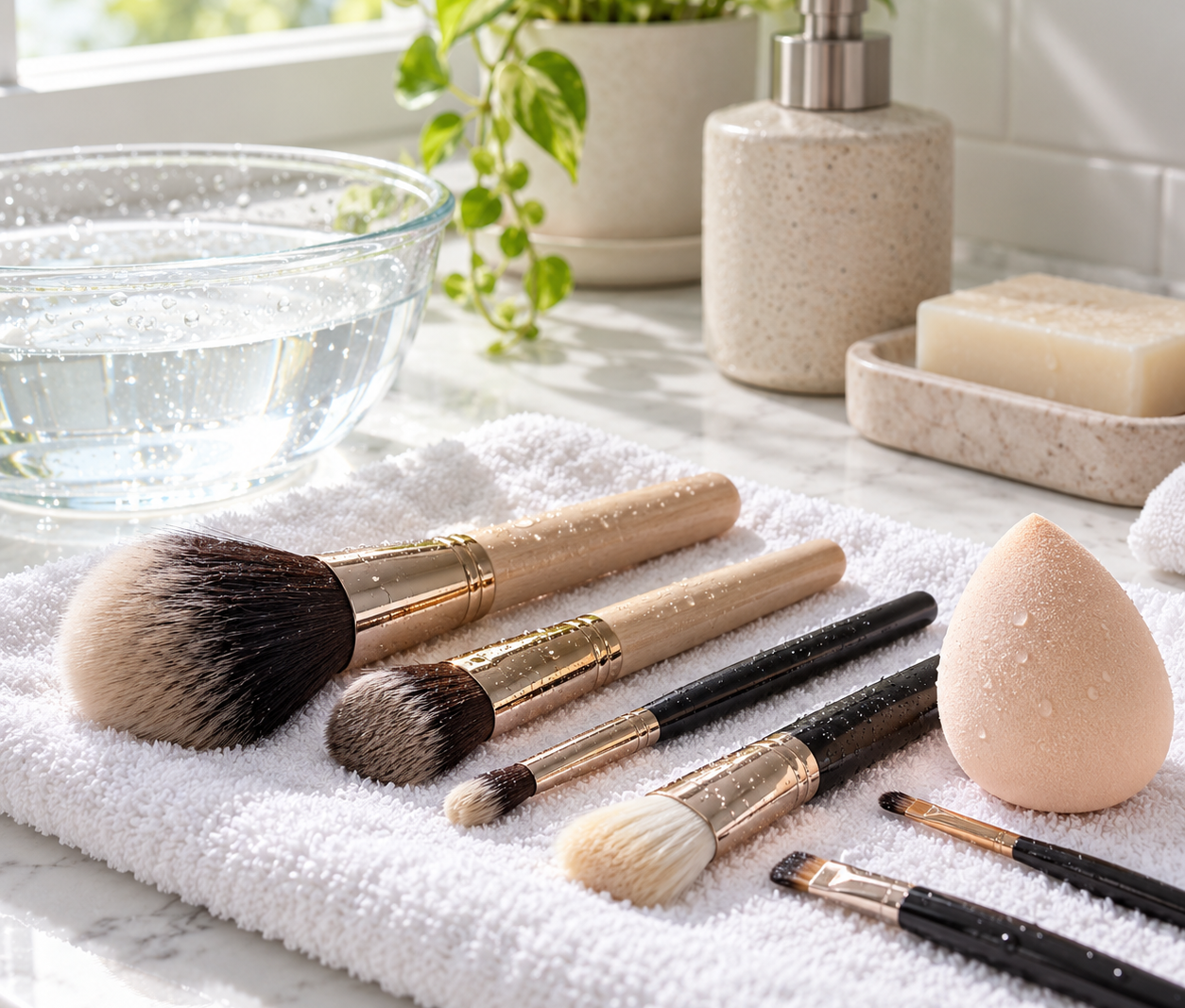
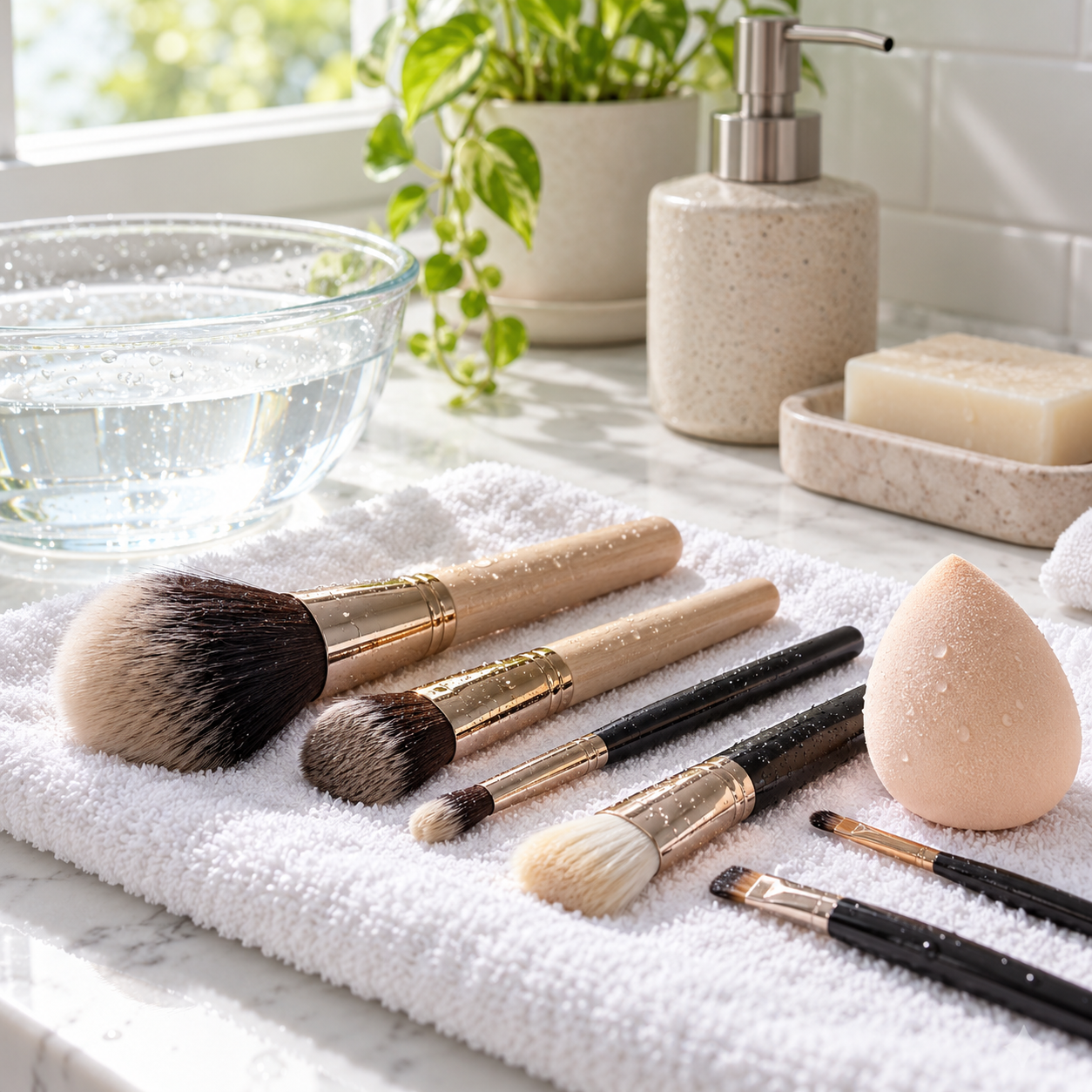
Image alt text: Clean makeup brushes and a makeup sponge drying on a fresh towel beside a sink.
Makeup brushes and sponges collect product residue as you use them. Cleaning reusable tools is a simple part of keeping a makeup routine tidy, and it helps prevent old product from building up on bristles and foam. Dermatologists at the American Academy of Dermatology (AAD) recommend washing makeup brushes every 7 to 10 days; they advise cleaning sponges after every use. Follow the tool maker’s directions too, especially for delicate or specialty brushes. AAD brush-cleaning guide AAD makeup and sunscreen guidance
What you need
Gather lukewarm water, a gentle cleanser or the brush maker’s recommended cleaner, a clean towel, and a flat surface for drying. Avoid soaking the full brush handle or ferrule (the metal part that holds the bristles), because excess water can loosen adhesives over time.
How to wash makeup brushes
- Wet only the bristles. Hold the brush with its head pointed downward and rinse the tips with lukewarm water. This helps keep water from running into the handle.
- Add a small amount of cleanser. Use a gentle shampoo or brush cleanser suitable for the tool. Do not use hot water, which can affect some brush materials.
- Work out product gently. Swirl the bristles in your palm or over a clean textured mat. Use light pressure; rough scrubbing can bend or shed bristles.
- Rinse until clear. Keep the handle elevated and rinse the brush head until the water runs clear. If the brush still feels coated, repeat with a little cleanser.
- Remove excess water. Gently squeeze the bristles with a clean towel. Reshape the brush head with your fingers.
- Dry flat. Lay the brush on a towel with the bristles extending beyond the counter edge if possible. Let it dry fully before storing or using it. Avoid standing a wet brush upright, which can let water travel into the handle.
How to clean a makeup sponge
Wet the sponge with lukewarm water and apply a small amount of gentle soap or the maker’s recommended cleanser. Squeeze and release it repeatedly so water moves through the material; do not twist hard or pull at seams. Rinse until the water runs clear, press out excess moisture with a clean towel, and let it air-dry completely in a clean, ventilated spot. AAD recommends cleaning sponges after every use.
How often should you clean your tools?
A useful starting schedule is to wash brushes every 7 to 10 days and clean sponges after each use, following AAD guidance. Clean a brush sooner if you switch between products or notice heavy residue. Never share makeup brushes or sponges, especially tools used around the eyes. The FDA also recommends keeping instruments placed near the eye clean and not sharing eye cosmetics. FDA eye cosmetic safety
When should you replace a brush or sponge?
Replace a tool when it stays stained or odorous after cleaning, sheds heavily, has damaged bristles, or develops cracks or tears that cannot be cleaned properly. There is no single lifespan that fits every product; inspect it and follow maker guidance. If you have an eye infection, follow healthcare advice and avoid reusing cosmetics or tools that may have been contaminated.
Common cleaning mistakes
- Submerging the entire brush, including the handle connection.
- Using very hot water or harsh cleaners without checking the tool instructions.
- Storing tools before they are fully dry.
- Sharing brushes, sponges, or eye makeup.
- Assuming a quick surface spray replaces a thorough wash when the tool needs cleaning.
Frequently asked questions
Can I use dish soap to clean makeup brushes?
A gentle shampoo or brush cleanser is a common choice in AAD’s guidance. Check the tool manufacturer’s instructions and avoid cleaners that leave residue or irritate your skin.
Can I dry brushes upright?
Dry them flat, or with the bristles angled downward, so water does not collect where the bristles join the handle. Wait until the head is fully dry before putting the brush away.
How often should I wash a makeup sponge?
AAD recommends cleaning sponges after every use. Follow the maker’s care instructions and replace a sponge that is damaged or cannot be cleaned.
Editorial note: Add the site’s genuine author byline and a qualified reviewer if desired. This is general tool-care information; consult a dermatologist for persistent irritation or skin concerns.
References: American Academy of Dermatology: How to clean your makeup brushes; FDA: Eye Cosmetic Safety
Related reading
You may also find our How to Look Fabulous Every Day, Even When You’re Not Leaving the House guide helpful.