SEO title: Scent Stacking for Beginners: How to Layer Perfumes
Meta description: Learn a simple, low-waste way to layer fragrances, test combinations, and choose scents that work together without buying a whole new perfume collection.
Suggested slug: scent-stacking-for-beginners
Primary search intent: Informational and commercial investigation
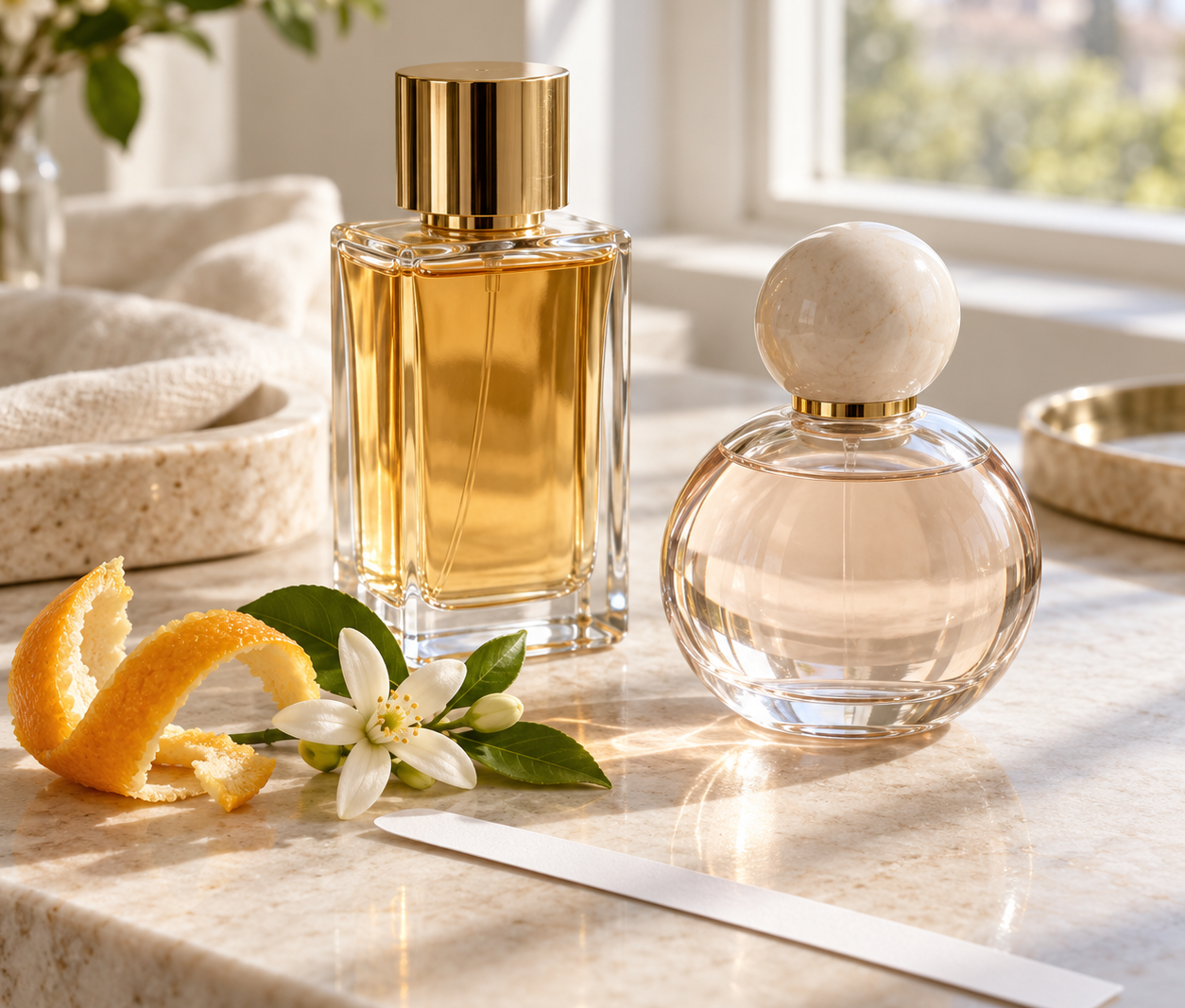
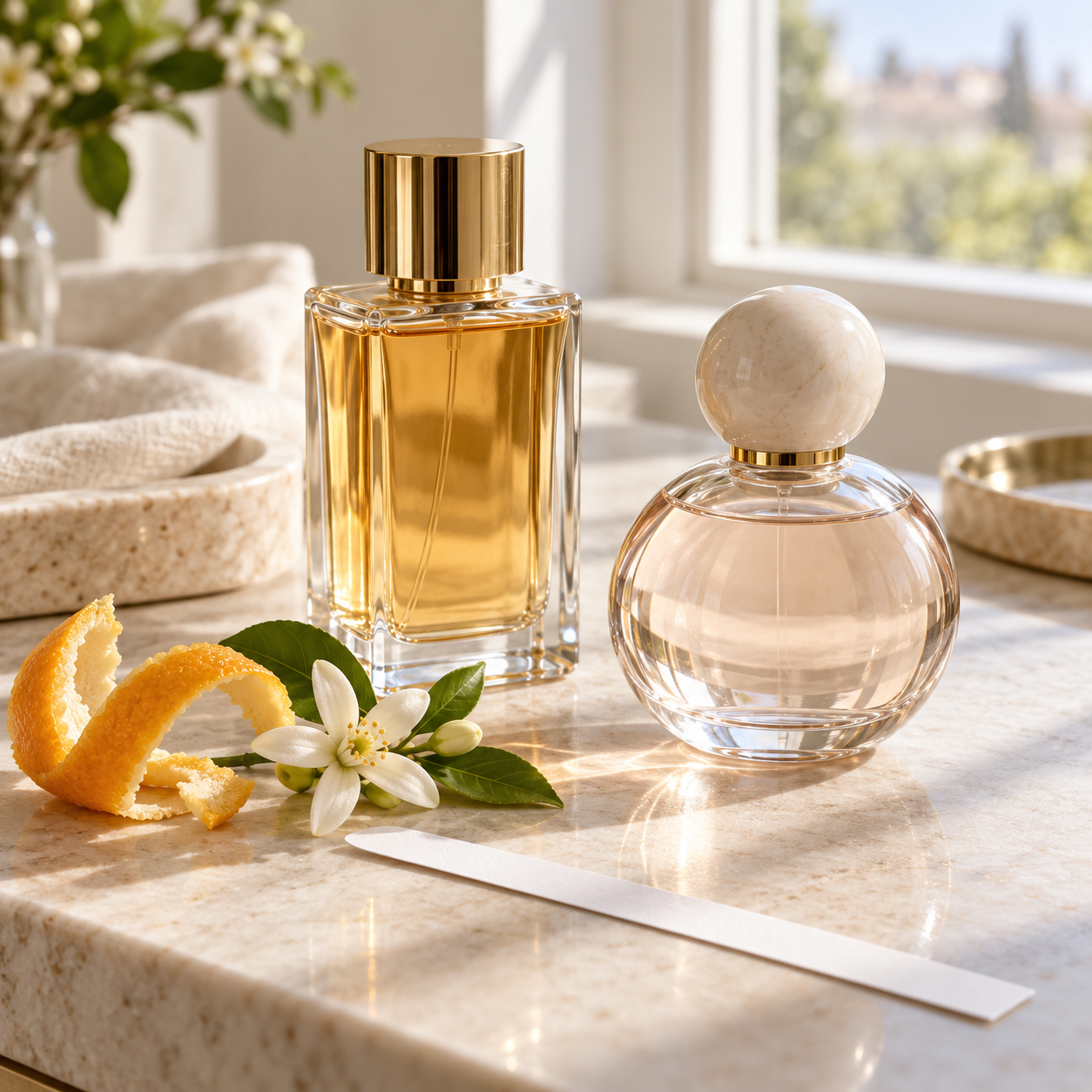
Image alt text: Two fragrance bottles and a paper scent strip arranged for testing a perfume combination.
Scent stacking, sometimes called fragrance layering, means wearing two or more scented products together. You can experiment with a perfume and an unscented moisturizer, or try two fragrances if you already own them. There is no universal formula: combinations smell different across products and people, and wearing one fragrance on its own is always a complete choice.
Start with one scent and one clear goal
Choose a fragrance you already enjoy and decide what you want from the pairing. You might want a fresher impression, a softer feel, or a slightly warmer scent. Use simple descriptions—citrus, floral, woody, sweet, fresh—to explain what you smell, not as strict rules that guarantee a match.
If you are new to layering, combine products that share a note or general mood. For example, a light citrus scent may pair easily with a soft floral body lotion, while a woody fragrance may work with an unscented moisturizer that does not compete. These are starting points, not promises about how the final combination will smell.
Test a combination before wearing it out
- Read product labels. Avoid combining products in ways that conflict with their directions. Do not mix products in their bottles.
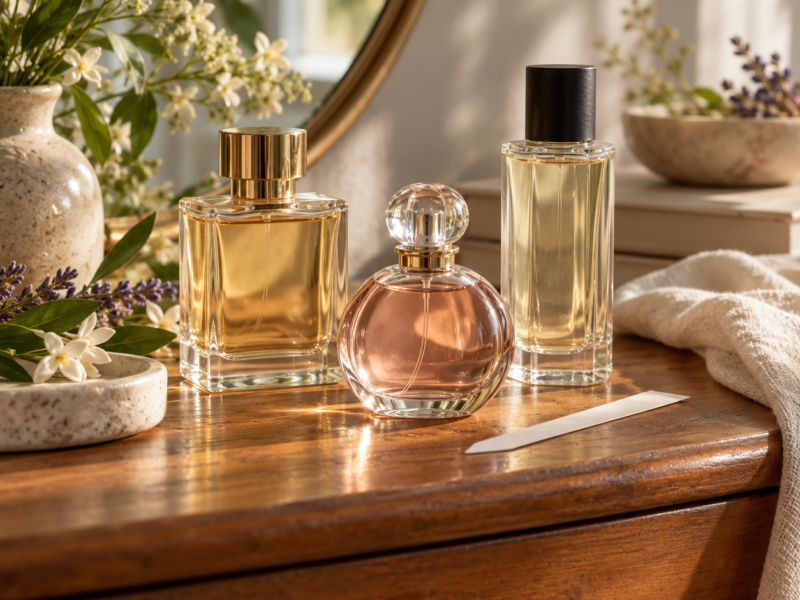
- Try a paper strip first. Spray one scent, let it settle, and then test the second on the same strip or a separate one held nearby. This gives you an early impression without applying several products to skin.
- Use a small skin test only if comfortable. Apply small amounts separately to skin rather than blending them together. Do not test on irritated or broken skin. Stop if you notice irritation.
- Give the scents time. The opening impression may change as a fragrance wears. Check again after a little time before deciding.
- Keep notes. Record the products, order, and amount. If you like the result, repeat it with a light hand.
Fragrance ingredients can cause reactions for some people. The FDA explains how fragrance may be listed on cosmetic labels and recommends discussing concerns with a healthcare professional. FDA: Fragrances in Cosmetics
A simple layering order
A practical starting approach is to apply scented body products first and perfume last, following each product’s label. If you want to control intensity, start with the smallest amount of each product. You can always add later, but it is harder to reduce a combination once applied.
Avoid spraying directly into the air and walking through a cloud if it wastes product or could bother others. For shared spaces, keep fragrance subtle and consider workplace, school, travel, and household preferences.
Pairings to try with what you already own
- Same-family pairing: Try two scents you already describe as fresh, floral, or woody. Use a small amount and see whether one overwhelms the other.
- Shared-note pairing: Compare ingredient or note descriptions and test products that mention a note you enjoy, such as vanilla or citrus.
- Perfume with unscented lotion: Use unscented moisturizer if you want a base without another competing scent. “Unscented” products can still contain masking fragrance, so check the label if avoiding fragrance matters to you.
- One fragrance, different amount: Before adding a second scent, see whether using less or applying to a different location gives you the effect you want.
Mistakes that make layering harder
- Testing several combinations on one small area at once.
- Combining strong fragrances before you know how either wears.
- Buying new bottles before experimenting with samples or products you own.
- Assuming note lists predict an exact result.
- Wearing a scent heavily in a fragrance-sensitive shared space.
Frequently asked questions
How many perfumes should you layer at once?
Start with two products at most. A single fragrance may be simpler and more comfortable, and layering is an optional experiment rather than a requirement.
Do fragrances have to share notes to layer well?
No. Shared notes can be a useful starting point, but they do not guarantee compatibility. Test the actual products in small amounts.
Can I layer perfume with body lotion?
You can try it if both products’ labels allow the intended use. An unscented lotion may compete less with a perfume, but check its ingredients if you are trying to avoid fragrance.
Editorial note: Add the genuine author byline and disclose affiliate relationships. Do not claim a combination was personally tested unless the author actually tested those products.
References: FDA: Fragrances in Cosmetics
Related reading
You may also find our Simple Tips To Always Smell Lovely and Fresh Throughout The Day guide helpful.